Natural creation - a magnificent epic of the evolution of life on Earth
The exhibition here is a magnificent history of life on Earth written with fossils and specimens.
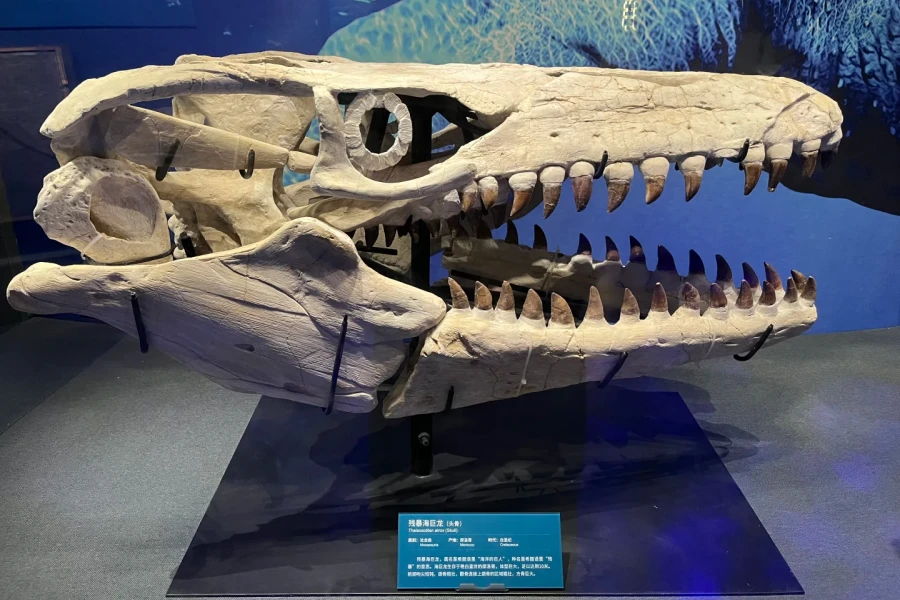
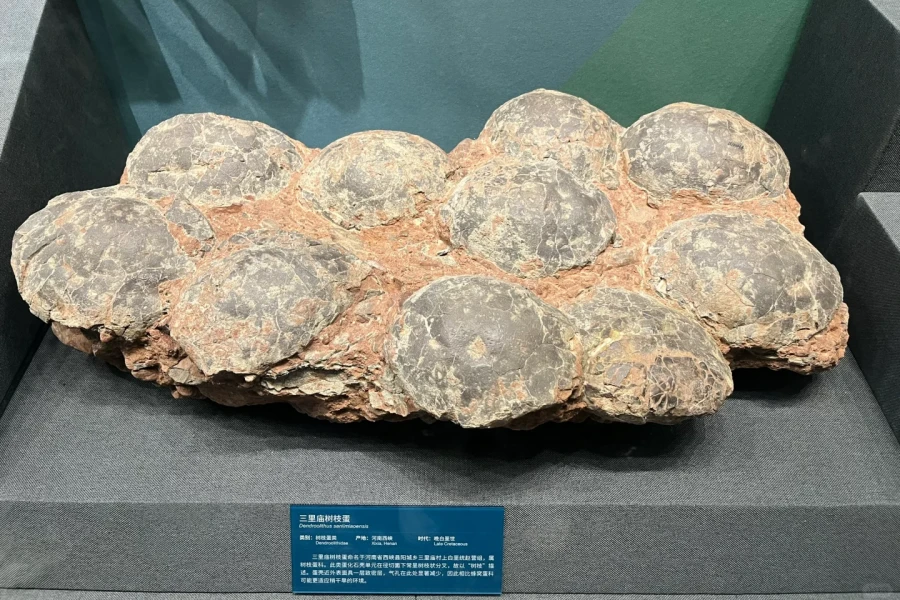
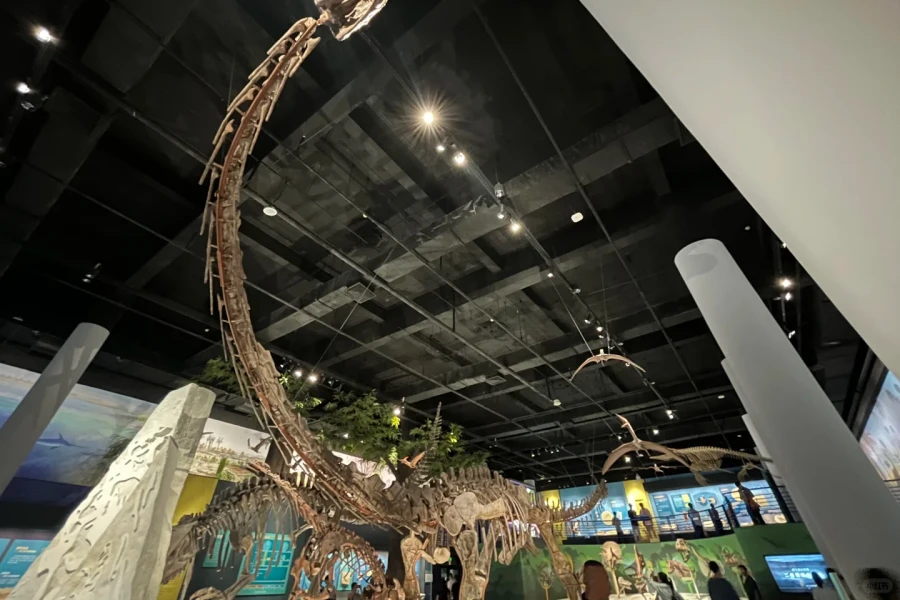
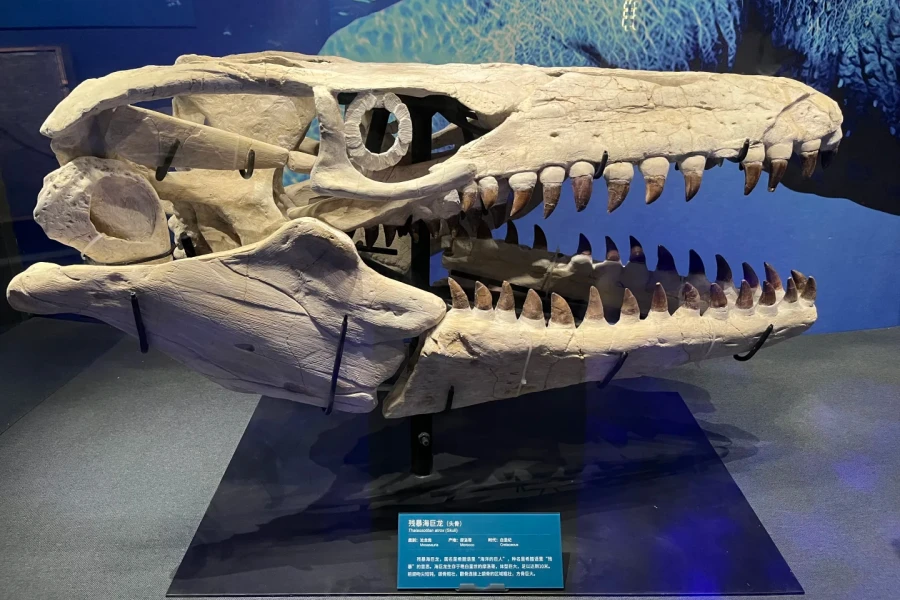
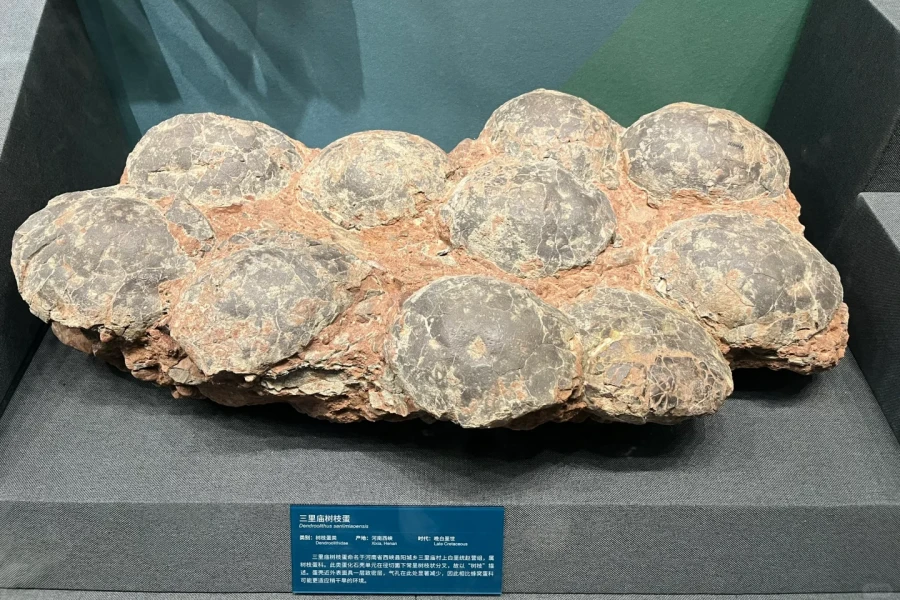
Hall of Ancient Reptiles (Dinosaur Dynasty): Walk into this hall and be instantly conquered by a huge skeleton. The 26-meter-long Jingyan Mamenxi dragon occupies the center of vision with its amazing neck; the ferocious Yongchuan dragon bares its teeth and claws, reproducing the moment of predation; There is also China's earliest scientifically named dinosaur - Xu's Lufengsaurus. It is not only the kingdom of dinosaurs, but also reptiles such as pterosaurs and crocodiles on display, completely outlining the picture of the hegemony of the earth in the Mesozoic era.
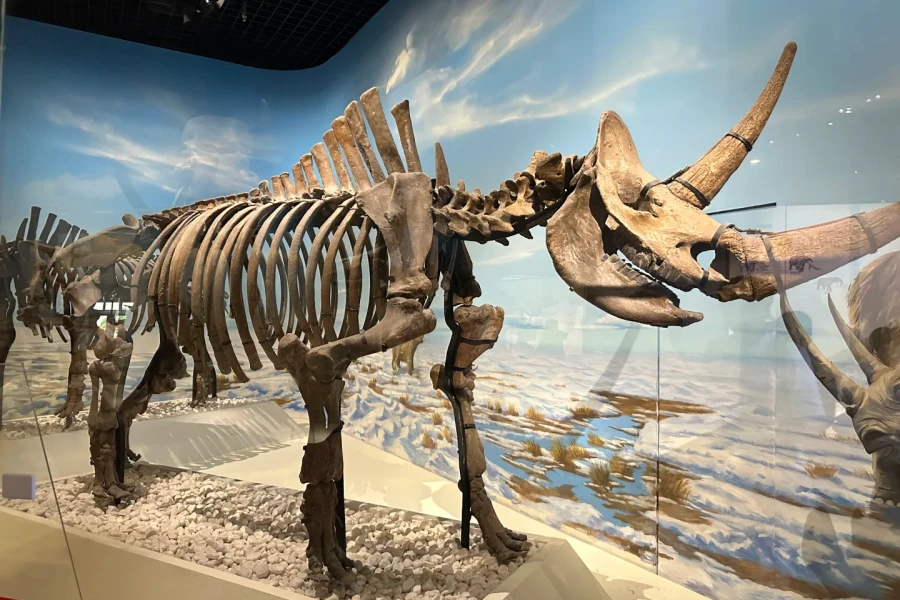
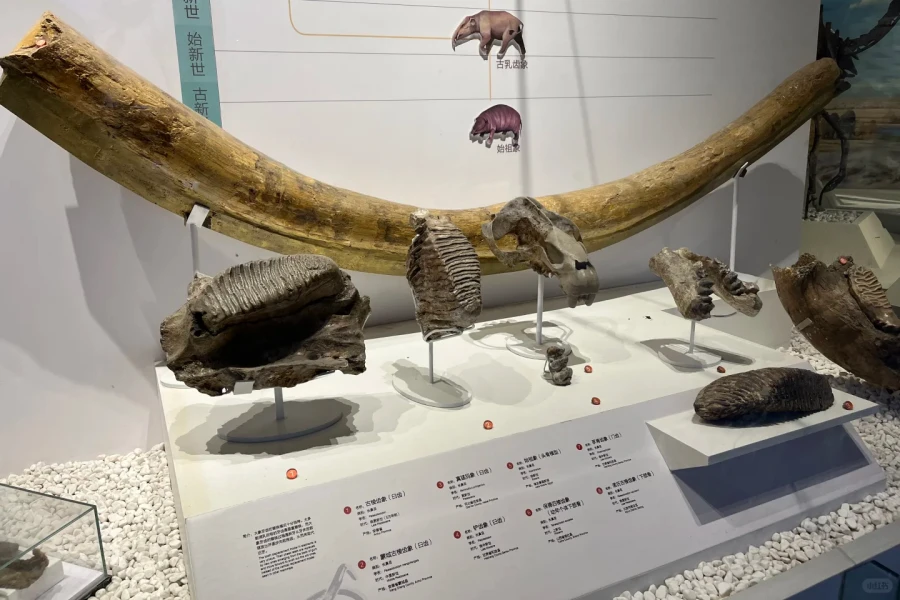
Hall of Ancient Mammals (Elegy of the Behemoth): After the extinction of the dinosaurs, mammals entered the historical stage. The extremely complete huge skeleton of the Yellow River elephant (Shi's saber-toothed elephant) is displayed here, which can be called a miracle in the fossil world. In addition, fossils of giant beasts from the Ice Age, such as mammoths, woolly rhinoceroses, and three-toed horses, bring the audience into that cold and magnificent era, telling the story of the rise and fall of species and environmental changes.
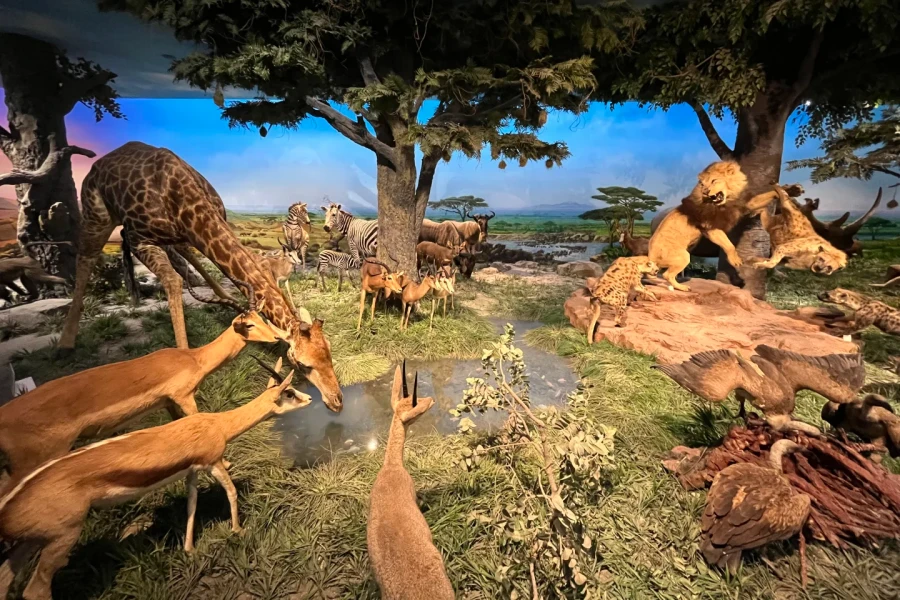
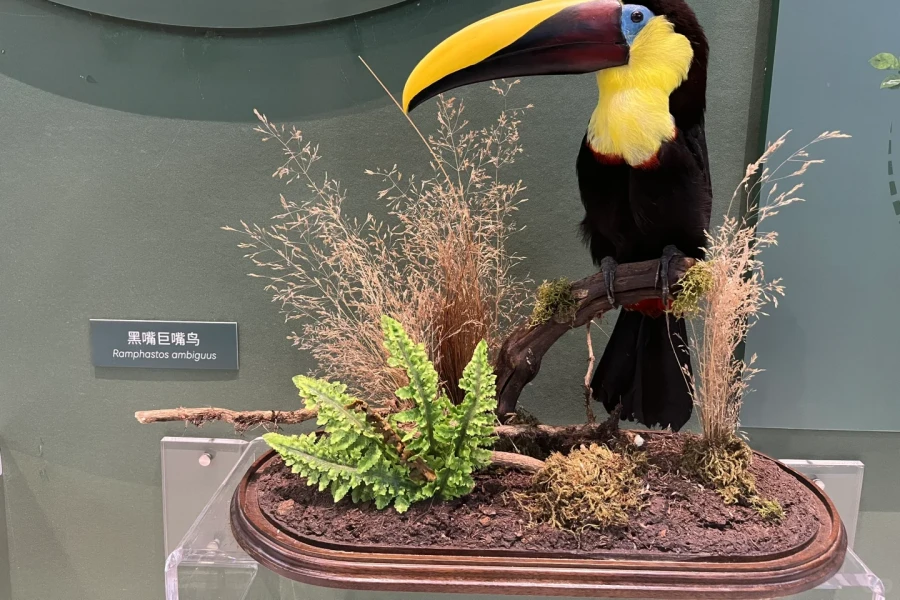
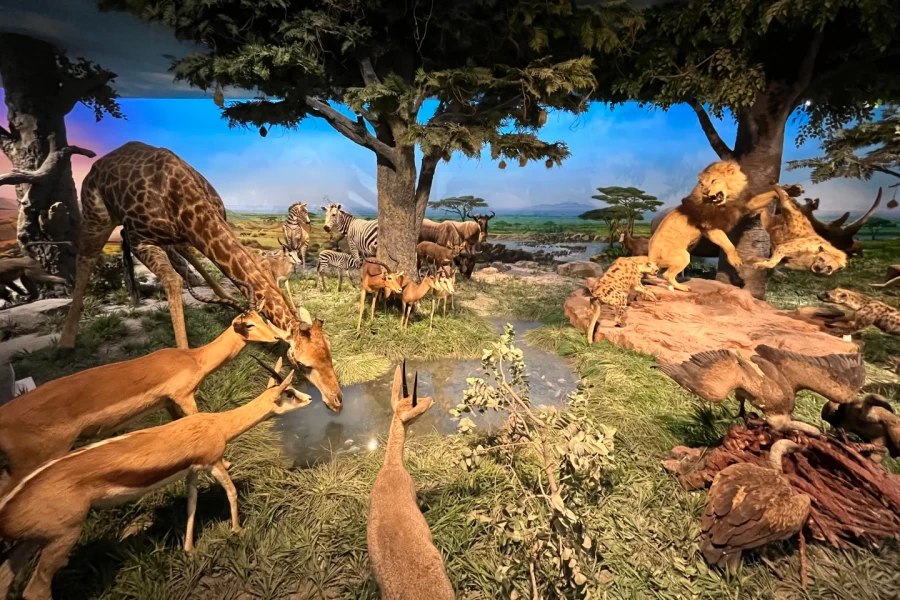
Animal-Human Friend Hall (Colorful Living Life): From the mysterious deep sea to the vast grasslands, hundreds of lifelike animal specimens have been created to construct a miniature landscape of the world's major ecosystems. The majestic Siberian tiger, the cute giant panda, and the herds of antelopes not only show the beauty of biodiversity, but also reveal the infinite wisdom of life to adapt to the environment.
Plant World Hall and Origin Hall of Man: From the earliest ferns to flowery angiosperms, from ancient apes to modern Homo sapiens, these two exhibition halls continue the narrative of life evolution from the perspectives of plants and humans themselves, and answer the ultimate question of "where do we come from".
Scientific research ingenuity - the science and art behind specimens
The charm of the museum lies not only in the display, but also in the in-depth research and ingenious restoration skills behind it.
The scientific value of the treasure of the town hall: The fossils of Xu's Lufengsaurus are extremely well preserved, which is of key significance for the study of the morphology and evolution of early dinosaurs. The skeleton of the Yellow River elephant is intact even with the difficult-to-preserve hyoid bone, which is a rare treasure in the history of world paleontology. Behind each top specimen is the great effort of generations of scientists in field excavation, indoor restoration and research.
Lifelike ecological landscape: The museum has carefully crafted large ecological landscape boxes such as "Underwater World" and "Tropical Rainforest". Among them, the "Into the Human Body" exhibition hall intuitively presents complex physiological knowledge through giant mannequins and interactive facilities, and this ability to translate scientific knowledge artistically and scene-based is the core embodiment of the museum's educational function.
Interactive exploration space: The "exploration corner" specially set up for teenagers, the real fossil experience area that can be touched, and the wonderful "experimental fun" science popularization activities transform esoteric scientific principles into hands-on and interesting experiments, fully reflecting the ingenuity of the museum of "edutainment and education".
Visit Cheats:
> Must-see focus: the dinosaur skeleton group of the Paleoreptile Hall, the Yellow River elephant skeleton of the Paleomammal Hall.
> Best route: It is recommended to start from the paleontology exhibition hall on the first floor and visit in the order of life evolution, and finally to the "Aquatic Biology Museum" and "Dinosaur Park" on the basement floor.
> Parent-child tips: The "Dinosaur Park" on the basement floor has an electric restored dinosaur model, which is very popular with children; Check the official website in advance for special event times such as "Science Lecture Hall" or "Museum Night".
> Photography Note: Due to the need to protect specimens, some exhibition halls are dim in light, so please do not use flash. The dinosaur skeleton hall is spacious and suitable for capturing stunning panoramic views with a wide-angle lens.