Ancient Longzhong:The Cradle of Wisdom—A Source of Three Kingdoms Strategy and the Site of Liu Bei’s“Three Visits to the Thatched Cottage”

Ancient Longzhong:The Cradle of Wisdom—A Source of Three Kingdoms Strategy and the Site of Liu Bei’s“Three Visits to the Thatched Cottage”

Overview:A Cradle of Strategic Wisdom—A Mountain“Small Yet Exquisite”

Ancient Longzhong served as the secluded retreat where Zhuge Liang—the preeminent statesman and military strategist of the Three Kingdoms period—spent his youth(ages 17–27)tilling the land,studying diligently,and cultivating his talents.It is also the historical setting for the famous episode of Liu Bei’s“Three Visits to the Thatched Cottage”and the formulation of the“Longzhong Plan”—the blueprint for restoring the Han Dynasty.This site boasts a history spanning over 1,800 years.

Key Highlights at a Glance

Designation:National 5A-level Scenic Area/Major Historical and Cultural Site Protected at the National Level

Core Experiences:Watch Asia’s largest live-action drama performed within a thatched cottage;stroll through an architectural complex featuring the distinctive styles of the Ming and Qing dynasties.

Recommended Visit Duration:4–5 hours

  • Ancient Longzhong:The Cradle of Wisdom—A Source of Three Kingdoms Strategy and the Site of Liu Bei’s“Three Visits to the Thatched Cottage”-1
  • Ancient Longzhong:The Cradle of Wisdom—A Source of Three Kingdoms Strategy and the Site of Liu Bei’s“Three Visits to the Thatched Cottage”-2
  • Ancient Longzhong:The Cradle of Wisdom—A Source of Three Kingdoms Strategy and the Site of Liu Bei’s“Three Visits to the Thatched Cottage”-3
  • Ancient Longzhong:The Cradle of Wisdom—A Source of Three Kingdoms Strategy and the Site of Liu Bei’s“Three Visits to the Thatched Cottage”-4

Origins:Kongming’s Ten Years of Waiting and the Echoes of Liu Bei’s Lifetime Quest

Furong Ancient Town Furong Ancient Town

The Seclusion of the“Sleeping Dragon”—A Retreat Where“The Mountain Is Small Yet Elegant,and the Land Is Spiritually Endowed with Exceptional People”

Ancient Longzhong is a valley that shines brilliantly,illuminated by the legacy of a single individual.In the waning years of the Eastern Han Dynasty,Zhuge Liang—a native of Langya(in present-day Shandong)—followed his uncle,Zhuge Xuan,to seek refuge with Liu Biao in Jingzhou,eventually settling in Longzhong,just west of Xiangyang City.At the time,he was merely 17 years old.For the next ten years,he“personally tilled the fields”;in this tranquil sanctuary at the foot of Mount Leshan in Longzhong,he farmed when the sun shone and studied when the rain fell,mastering the art of warfare and cultivating friendships with renowned scholars.These ten years were not a period of passive withdrawal from the world,but rather a prolonged and covert process of strategic deduction.Within his thatched cottage—with the heavens and earth serving as his chessboard—he internalized the topography of the Han Empire,mapping out every mountain range,river system,and strategic choke point.Under the solitary glow of his lamp and the cold light of the moon,he spent a decade concealing his brilliance and tempering his resolve,quietly awaiting the moment for a dialogue that would ultimately shake the very foundations of the world.

The Sincerity of the“Three Visits”—How the Longzhong Plan Established the Tripartite Division of the Realm

For Liu Bei,the quest to recruit this sage was a journey akin to walking on thin ice.Following his defeat at the Battle of Guandu,he had sought refuge with Liu Biao and was stationed in the garrison town of Xinye.Liu Bei repeatedly heard the name"The Sleeping Dragon"from the renowned scholars Sima Hui and Xu Shu,and became convinced that this was the exceptional talent—the man he had been dreaming of day and night—who would help him restore the Han Dynasty.In the winter of the twelfth year of the Jian'an era(207 AD),Liu Bei,accompanied by his sworn brothers Guan Yu and Zhang Fei,braved the snow to seek out this sage.After two fruitless attempts,they finally knocked upon his rustic gate for the third time amidst a swirling blizzard.At that moment...

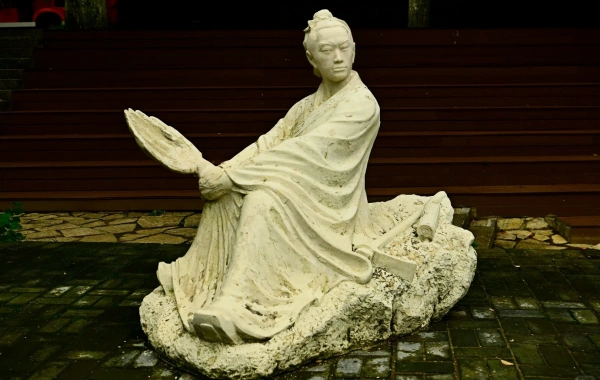
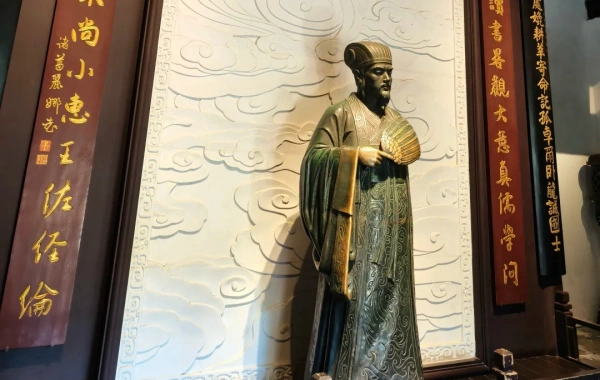
The young Zhuge Liang,utilizing a perspective akin to a modern map,analyzed the geopolitical landscape of the realm for Liu Bei:"Jingzhou commands the region north of the Han and Mian rivers,extends its reach to the South Sea,connects to the territories of Wu and Hui in the east,and opens a path to Ba and Shu in the west;truly,it is a land ripe for military action."With the feather fan in his hand,he pointed across the landscape,outlining a grand blueprint:"Dividing the Realm into Three Kingdoms,and forging an alliance with Wu to resist Cao Cao."For Liu Bei,it was as if the clouds had parted to reveal the sun;he uttered a timeless exclamation that would echo through the ages:"To have Kongming is like a fish finding water!"From that moment on,the course of Chinese history reached a pivotal turning point.Consequently,Longzhong—thanks to this conversation that would forever rewrite history—came to be hailed by the world as the"Cradle of Wisdom"and the"Birthplace of the Three Kingdoms Strategy."

>Dive Deeper:Explore More Cultural Heritage Sites of the Three Kingdoms Era<<[Changsha Window of the World]

Must-See Wonders:Tracing the Footsteps of the"Sage of War"—A Symphony of History and Architecture

Furong Ancient Town Furong Ancient Town Furong Ancient Town Furong Ancient Town Furong Ancient Town

Nature's Masterpiece:A Serene Wilderness Sanctuary Nestled Amidst the Mountains

The natural landscape of Ancient Longzhong is a poetic tableau woven from mountains,fields,and forests.

The"Gonggeng"Field(The Field of Personal Cultivation):A Pastoral Scene Bearing Witness to a Life of"Toiling in the Furrows"

At the wide,open entrance to Ancient Longzhong,a stretch of flat,orderly farmland immediately catches the eye.This is the very land that Zhuge Liang personally tilled in his youth—the place where the famous phrase from the Records of the Three Kingdoms(Book of Shu)—"toiling personally in the furrows"—is brought to vivid,tangible life.A stone stele stands at the edge of the field,while a waterwheel and a thatched pavilion dot the landscape,recreating the image of"The Sleeping Dragon":a man living far removed from the dust and clamor of the world,who,in the quiet moments between farming chores,"loved to recite the Song of Liangfu."As a gentle breeze sweeps through,the waves of wheat sway softly,allowing one to instantly resonate with the very same winds that blew over 1,800 years ago.More than 1,500 years ago—during the Northern Wei Dynasty—Li Daoyuan recorded in his Commentary on the Water Classic that an"old well still remains...marking the very spot where[he]personally tilled the land."

The Old Dragon Cave:An Ancient Legend Witnessed by a Mountain Spring

The Old Dragon Cave is nestled deep within a bamboo grove on the slopes of Mount Longzhong.Here,a mountain spring surges forth from the heart of the mountain,flowing ceaselessly with a gentle murmur.Legend has it that during his time in Longzhong,Zhuge Liang frequently visited this spot to draw water.The cave's water is remarkably clear and sweet—warm in winter and cool in summer—and visitors today often pause here to wash their hands and make a wish.Shimmering bamboo shadows dance beside the cave;upon discovering this secluded spot,one is surrounded by nothing but the mountain breeze and the chirping of insects—creating an atmosphere of profound poetic and artistic beauty.

Cultural Heritage and Ingenuity:A Journey Through Time and Space—From the"Ten Scenes of Longzhong"to the Grass Hut Theater

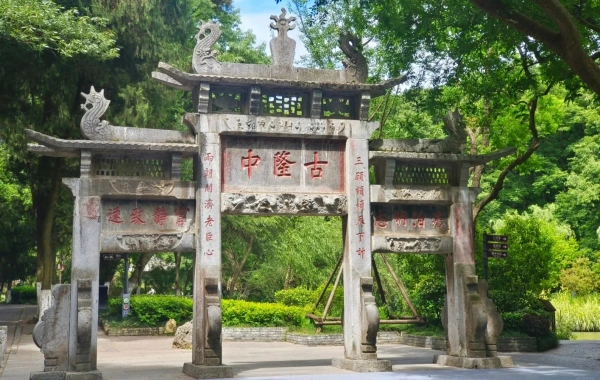
The cultural architecture of Ancient Longzhong centers around the Stone Archway,which serves as the grand entrance to the site.With its historical relics at the core,the complex weaves together a spiritual sanctuary that has endured for a thousand years.

The Stone Archway:The Crowning Jewel of the Scenic Area—Etched with Cultural Heritage

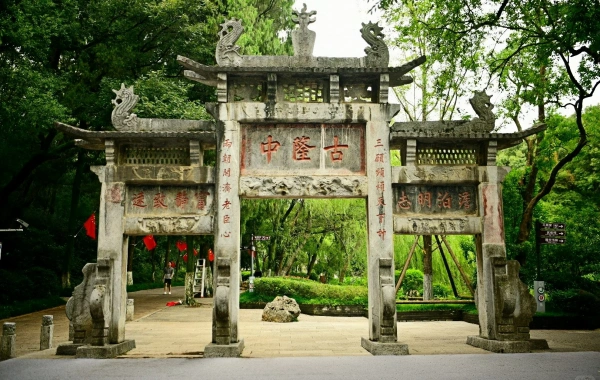
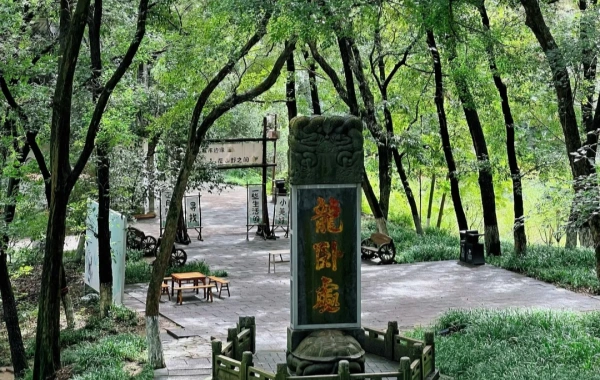
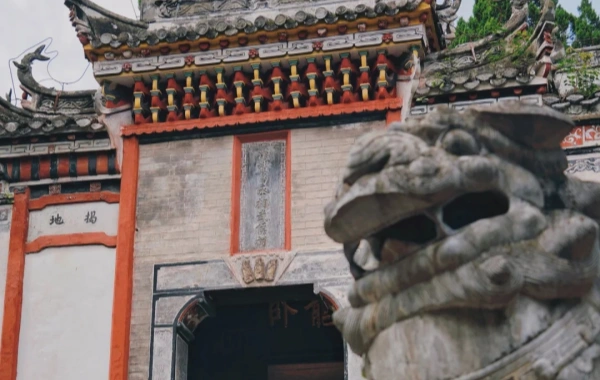
The Stone Archway serves as the primary gateway to Ancient Longzhong—and indeed,stands as its most significant landmark.Constructed in the 19th year of the Guangxu reign during the Qing Dynasty(1893 AD),this archway features a faux-timber design,comprising four pillars and three gateways;it stands approximately 6 meters tall and spans about 10 meters in width.Inscribed upon the stone pillars at the very top are famous lines by the renowned poet Du Fu:"Three times he sought counsel,burdened with plans for the realm;two dynasties he served,a loyal heart growing old in service."On the reverse side,centered prominently,is the supreme accolade:"The One Man Since the Three Dynasties."This tribute signifies that Zhuge Liang was—in the nearly one thousand years following the legendary Xia,Shang,and Zhou Dynasties—the sole figure of such monumental greatness as to cast his brilliance across the ages.Flanking this central inscription are two famous maxims drawn from Admonitions to My Son:"Cultivate a tranquil mind to clarify your aspirations;embrace serenity to achieve far-reaching goals."With its rustic elegance,the archway harmonizes seamlessly with the distant peaks of Mount Longzhong and the nearby fields where Zhuge Liang once tilled the soil,making it the quintessential spot for visitors to capture memorable photographs.

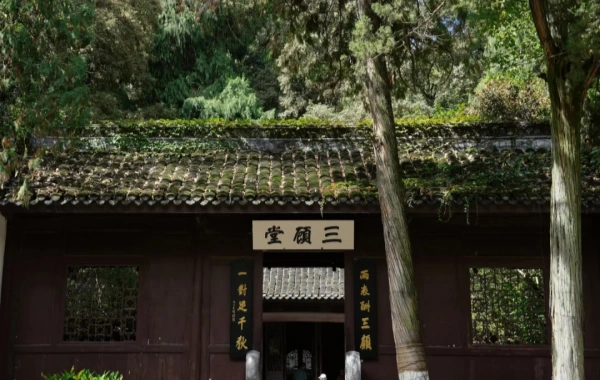
The Hall of Three Visits:The Timeless Meeting Place of a"Fish-and-Water"Bond Between Ruler and Subject

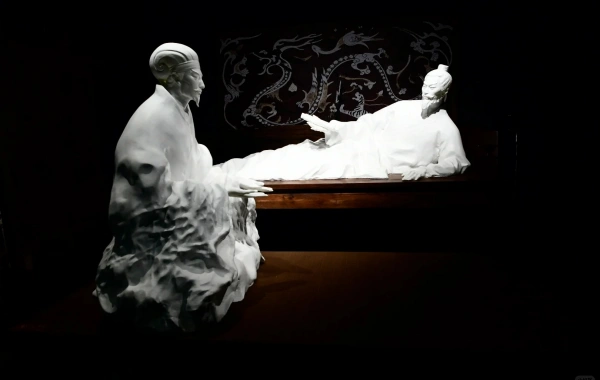
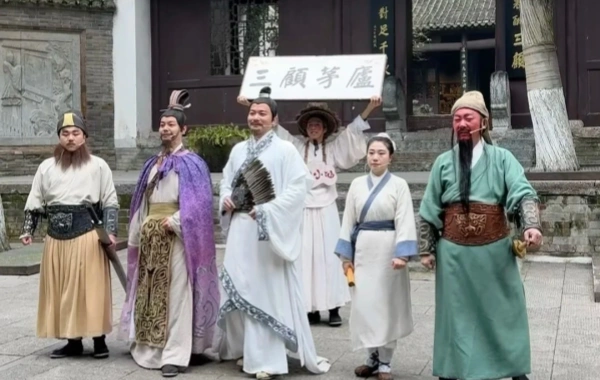
"Two memorials offered in return for three visits;a single bond destined to endure for a thousand autumns."Sangu Hall is a memorial shrine built to commemorate Liu Bei’s"Three Visits to the Thatched Cottage"and Zhuge Liang’s"Longzhong Dialogue."The structure was originally constructed in the 58th year of the Kangxi reign(1719 AD)during the Qing Dynasty;the main building standing today is the result of a reconstruction undertaken in the 7th year of the Yongzheng reign(1729 AD).At the center of the hall stands a group of lifelike fiberglass sculptures,recreating the historic moment when Liu Bei and Zhuge Liang conversed by candlelight late into the night,jointly plotting the grand strategy for the realm.Zhuge Liang’s composure and wisdom,alongside Liu Bei’s ardent eagerness to seek out talent,are portrayed with a perfect blend of physical likeness and spiritual essence.On holidays and festivals,a theatrical reenactment of"Three Visits to the Thatched Cottage"is performed in front of Sangu Hall;this performance vividly captures Liu Bei’s sincerity and Zhuge Liang’s expansive vision for the world,making it one of the site’s most popular immersive cultural experiences.

Wuhou Shrine:A Pilgrimage Site for Zhuge Liang Amidst Red Walls and Dark Tiles

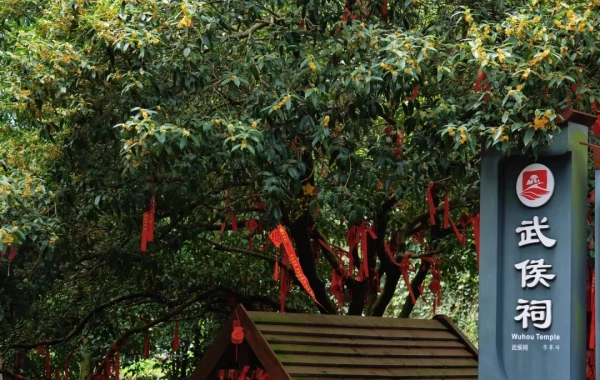
The Wuhou Shrine,originally established during the Jin Dynasty,is a temple dedicated to the worship of Zhuge Liang.Situated on the slopes of Mount Longzhong,the shrine has endured a tumultuous history of rise and fall across the Sui,Tang,Song,Yuan,Ming,Qing,and Republican eras.The current architectural complex was reconstructed in the 38th year of the Kangxi reign(1699 AD)by Jiang Xingqi,the Imperial Observer of the Jingxiang region.The shrine features a tiered,four-courtyard layout;within the highest-situated hall,statues of three generations of the Zhuge family—grandfather,father,and grandson—are enshrined.The shrine also houses rubbings of the Chu Shi Biao(Memorial to the Emperor),handwritten by the renowned General Yue Fei.Here,the General’s impassioned patriotism(as expressed in his poem Man Jiang Hong)and the Chancellor’s unwavering devotion to duty engage in a silent dialogue across the ages,their spirits resonating through the bold,vigorous strokes of their calligraphy—each character pulsating with the heart of a true patriot devoted to the same nation.Additionally,the shrine grounds feature a fragrant Osmanthus tree over 400 years old,which seems to possess a spiritual aura.Amidst the interplay of red walls,dark tiles,and ancient pines,and enveloped by the curling smoke of incense,the site exudes an atmosphere of solemnity and tranquility.

Zhuge’s Thatched Cottage:A Living Historical Epic Ignited by Three Sparks of Fire

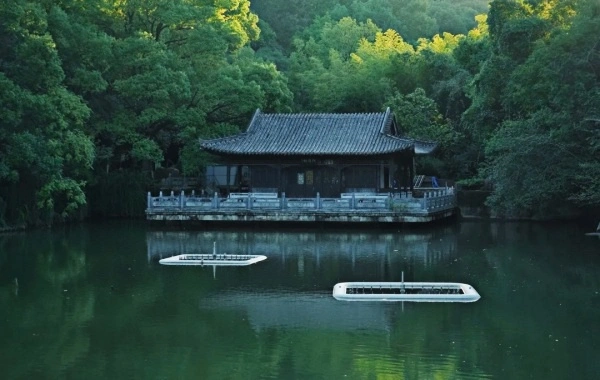
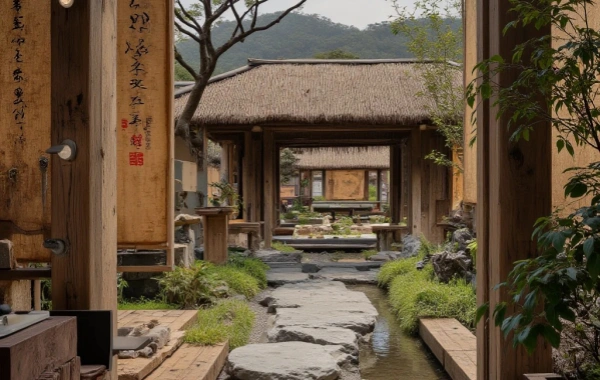
Following the mountain path upward,one arrives at Zhuge’s Thatched Cottage.The Thatched Cottage served as the residence where Zhuge Liang once lived,studied,and personally tilled the land during his years of seclusion in Longzhong.Modeled after Han Dynasty architecture,the structure features an earth-and-timber construction with a total area of​​463.5 square meters,divided into front and rear courtyards.The four characters"Zhuge Thatched Cottage,"inscribed directly above the entrance,were penned by the renowned scholar Guo Moruo.Visitors touring the grounds at night must not miss the grand-scale,live-action drama The Thatched Cottage:Zhuge Liang,performed within the purpose-built Thatched Cottage Theater.Representing an investment of 291 million RMB,the venue is the largest live-action theater in Asia designed in the architectural style of a thatched cottage.The production employs the changing seasons of the cottage as its central motif,blending dance,martial arts,and light-and-shadow effects to artistically recreate classic episodes such as the"Longzhong Plan,"the"Debate Against the Scholars,"and the"Empty Fort Strategy."Offering an exceptional immersive experience,the performances are frequently sold out.

Longzhong Academy and the Hexagonal Well:Ancient Charm and Scholarly Fragrance Drifting from the Mountains

Longzhong Academy was originally established during the Tianfu era of the Five Dynasties period(936–943).Covering a ground area of​​3,600 square meters with a built-up area of​​1,123.44 square meters,the complex is organized into six distinct sections:the Preface Hall,the Aspiration Hall,the Diligence-in-Governance Hall,the Integrity-in-Governance Hall,the Admonition-to-Sons Hall,and the Outlook Hall.Together,these sections comprehensively showcase the deeds and philosophies of Zhuge Liang—ranging from his early aspirations and self-cultivation to his diligent and upright governance of the state,as well as his principles regarding the education of his children.Strolling through the academy,visitors are instantly transported into the realm of his profound wisdom,encapsulated in the maxim:"Learning requires tranquility;talent requires study."The Hexagonal Well stands as the sole surviving relic directly associated with Zhuge Liang's daily life after he emerged from seclusion;for over a thousand years,its waters have remained crystal-clear and unfailing,serving as a site for visitors to pay their respects and reflect on the past.

Tenglong Pavilion and the Depths of Wolong:Panoramic Vistas of Majestic Mountains from the Summit

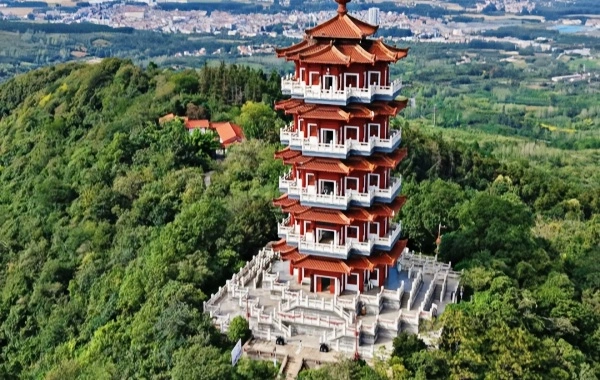
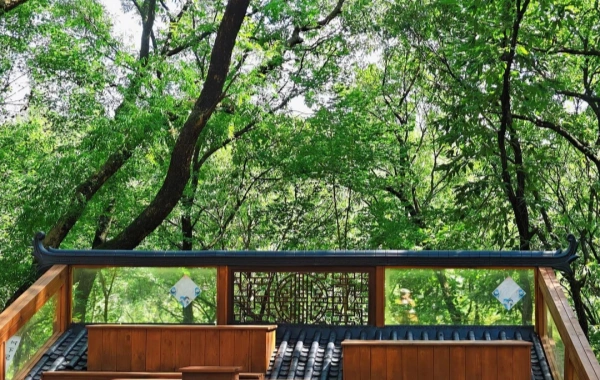
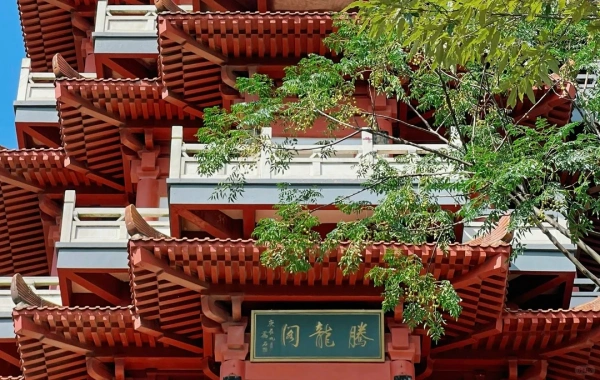
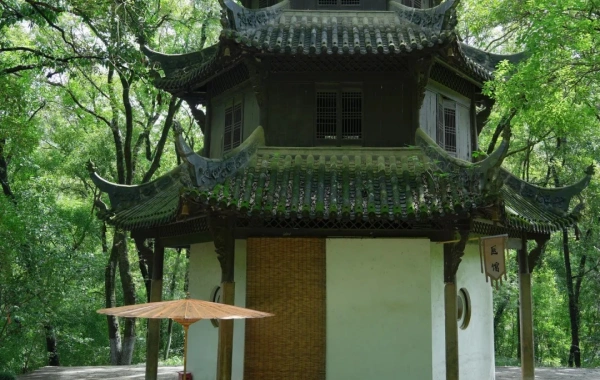
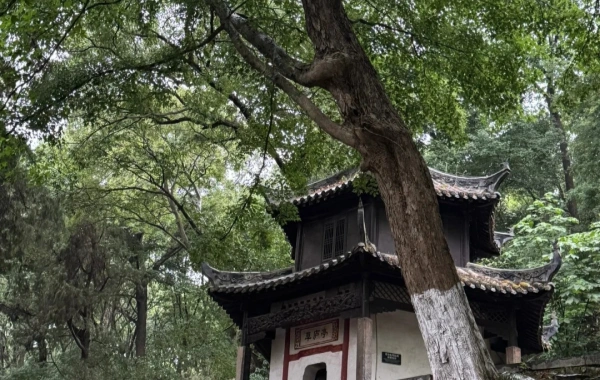
Ascending to the summit of Mount Longzhong,one encounters Tenglong Pavilion.Standing 34 meters tall with eight sweeping eaves reaching toward the sky,the pavilion offers a unique and ethereal scene where the mountain landscape,the Han River,and the silhouettes of distant sails converge in perfect harmony.From within the pavilion,visitors can enjoy a commanding panoramic view of the entire Longzhong Scenic Area as well as the ancient city of Xiangyang.At the foot of the mountain lies the"Depths of the Crouching Dragon"(Wolong Shenchu),a complex originally established during the Yongzheng reign of the Qing Dynasty.The four characters—"Depths of the Crouching Dragon"—inscribed above the entrance lintel were personally penned by Wang Renzhong,a former Vice Chairman of the National People's Congress.Comprising three distinct courtyards—Eastern,Central,and Western—arranged in harmonious,staggered fashion,the site invites visitors to seek out the Hall of Kongming's Zither.Here,amidst the accompaniment of ancient zithers and chime bells,one can listen to the melody The Grass Hut Bathed in Han Dynasty Moonlight while savoring a cup of fine tea from Longzhong.

Core Experience:An Engaging Journey of Play and Learning—A Dialogue Across Time with the Sage

Furong Ancient Town Furong Ancient Town Furong Ancient Town Furong Ancient Town Furong Ancient Town

Five Must-Do Activities to Unlock the Full Experience of Ancient Longzhong

1.Immerse Yourself in"Zhuge"Theatrical Reenactments—Fulfilling Your Dream of Time Travel

Key Highlight:This is no mere sightseeing tour;it is a visceral,immersive experience that brings the historical event of the"Three Visits to the Grass Hut"vividly to life!

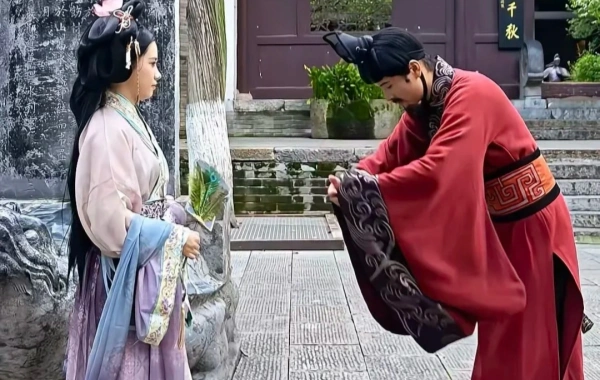
Experience:During holidays and festivals,Ancient Longzhong hosts a wealth of immersive parades and mini-dramas.In front of the Hall of Three Visits(Sangu Tang),you might serendipitously encounter the"Three Brothers"—Liu,Guan,and Zhang—reenacting the moving tale of their quest to recruit a worthy sage.Alternatively,you can don traditional Hanfu attire and follow the lead of NPC(non-player character)guides to participate in the grand spectacle of"Zhuge Liang's Wedding,"experiencing firsthand the romance and solemnity of a traditional Han-style marriage ceremony.

2.Explore the"Ten Scenic Spots of Longzhong"—Retracing the Path of the"Three Visits"

Experience:Follow the designated route—"Stone Archway→Ploughing Fields→Little Rainbow Bridge→Grass Hut Pavilion→Hexagonal Well→Hall of Three Visits→Temple of Marquis Wu→Soaring Dragon Pavilion"—to retrace the exact path taken by Liu Bei during his"Three Visits."Within these historical spaces—at once exquisite and rustic—you can pay homage to sites such as the Temple of Marquis Wu and the Longzhong Academy,pausing at each stop to gain intimate glimpses into the daily life of the young Zhuge Liang.

3.Night Tour of the Grass Hut—Commemorating the Sage's Grandeur Through a Dramatic Spectacle

Experience:Skip the daytime crowds and set aside a dedicated evening for this special occasion.Step into Asia's largest open-air theater—designed in the iconic shape of a grass hut—to witness the grand-scale live-action drama,The Grass Hut:Zhuge Liang.As the story of the"Three Visits to the Thatched Cottage"materializes and rises before your eyes—and as the spirited eloquence of Zhuge Liang's"Debate Against the Scholars"is reenacted within the mountain hollow—the sheer impact of the experience is a hundred times more profound than merely reading about it in books.

4.Visit in Early Winter or Early Spring to Capture the Perfect"Rising Mist"Photos

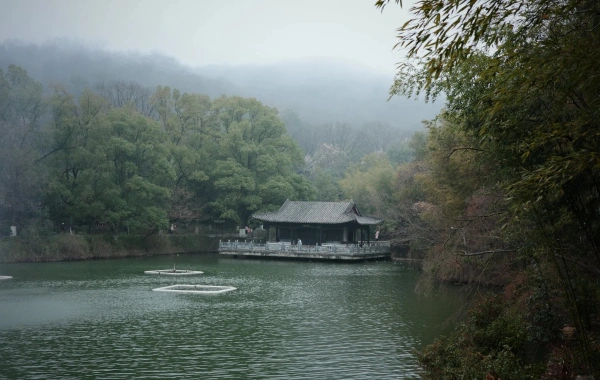
Experience:The ancient Longzhong area offers distinct charms in every season;however,early winter(late November to early December)and the early mornings of spring possess a unique allure all their own.At dawn,the stone archway and the grove of ancient trees lie shrouded in a thin veil of mist,while the red walls and dark-tiled roofs of the Hall of Three Visits and the Temple of Marquis Wu appear and vanish like phantoms.Every casual snapshot you take becomes a transcendent ink-wash painting,evocative of the Tang and Song dynasties.

5.Savor Authentic Xiangyang Cuisine and Relive the Spirit of the Three Kingdoms Era

Must-Try Dishes:Xiangyang Beef Noodles(chewy noodles served in a rich broth infused with spicy beef oil—an absolute breakfast essential);Brown Sugar Cakes(a specialty from the historic North Street,crispy and sweet);Yicheng Pan-Fried Eel;and"Kongming Vegetables"paired with Xiangyang Yellow Wine.

Recommended Spots:The"Zhuge Liang Restaurant"located within the scenic area;North Street in the city center;Chenji Beef Noodles;and the Yicheng Pan-Fried Eel Restaurant.

Suggested Itinerary

Half-Day"Highlights in a Flash"Tour(Ideal for those with limited time):

Arrive at the Visitor Center at 9:00 AM→Take the scenic shuttle bus to the core attraction area→Snap photos at the iconic Stone Archway(15 minutes)→Admire the"Gonggeng Fields"(Farming Grounds)and the Longzhong Academy(30 minutes)→Enter the Hall of Three Visits to watch the theatrical reenactment(combining indoor and outdoor scenes;30 minutes total)→Stroll through the Temple of Marquis Wu to soak up the historical atmosphere surrounding Zhuge Liang and his family(40 minutes)→Follow the mountain path up to the Thatched Cottage Pavilion and the Six-Sided Well to gain insight into Zhuge Liang's daily life and living quarters(30 minutes)→Take the return electric shuttle for a relaxing descent down the mountain→Total tour duration:approximately 2–3 hours.

IntoTravelChina Tip:Upon entering the scenic area,we recommend taking the electric shuttle bus directly to the central zone before continuing on foot;this helps conserve energy by sparing you the effort of traversing the area's hilly and undulating terrain.One-Day"Immersive"Tour(Highly Recommended:Pair with the Grass Hut Theater Night Performance):

14:00—Arrive at the Scenic Area→Stone Archway→Longzhong Academy→Hall of the Three Visits→Wuhou Shrine→Hexagonal Well→Kneeling Pavilion(approx.3 hours)→Coffee&Light Refreshments Break within the Scenic Area→Evening:Head to Tenglong Pavilion to Await the Sunset and Enjoy Panoramic Views(approx.1 hour)→19:30—Enter the Grass Hut Theater→Watch the Stunning,Large-Scale Live-Action Performance(approx.1.5 hours)→Approx.21:20—Performance Concludes;Board the Scenic Area Shuttle for Departure.

IntoTravelChina Advantage:We can handle the booking of your night performance seats on your behalf,ensuring a seamless transfer between the scenic area shuttle service and your return transportation to the city center.>>[Click to contact IntoTravelChina Travel Consultant]

Comprehensive Travel Guide:Transport,Timing,and Accommodation

Furong Ancient Town Furong Ancient Town Furong Ancient Town Furong Ancient Town Furong Ancient Town

How to Get There:Seamless Connections via Car or Public Transport

Gu Longzhong is situated 13 kilometers west of Xiangyang City.Located right next to the urban area,it boasts extremely smooth and convenient transportation links.

Self-Driving(Recommended):Use your GPS to pinpoint"Xiangyang Gu Longzhong Visitor Center"(襄阳古隆中游客中心).The drive from downtown Xiangyang takes approximately 25 minutes,and the scenic area provides a large,free parking lot.

High-Speed​​Rail/Train+Shuttle:Upon arriving at Xiangyang East Station or Xiangyang Station,you can take a dedicated tourist shuttle bus directly to the Gu Longzhong Visitor Center.Alternatively,from Xiangyang Railway Station,you can take bus routes 1,512,or 27 to Jiefang Bridge,then transfer to bus route 6 to reach the destination.

Public Transport:From downtown Xiangyang,you can take bus route 6 directly to the"Gu Longzhong Visitor Center"stop.

Scenic Area Entrance:Currently,all ticket purchasing and verification take place centrally at the Visitor Center.You must transfer to the scenic area's internal shuttle service to reach the core attractions.

Important Departure Reminder:It is best to verify the specific opening hours for the day of your visit.It is generally safest to exit the premises before 17:30(during the summer season,opening hours are slightly extended,allowing for departure as late as 18:30).If you have purchased a"Night Tour"ticket,you are exempt from the standard closing restrictions and may take your time departing after the evening performances have concluded.

Best Time to Visit

Gu Longzhong is at its finest during the spring and autumn seasons.Spring(March–May)brings lush greenery and singing birds,with peach blossoms blooming in vibrant hues;Autumn(September–November)offers crisp air and clear skies,with the forests ablaze in colorful foliage and a packed schedule of festive events.Additionally,the misty mornings and evenings of early winter provide a unique window for photography enthusiasts to capture that exclusive sense of"secluded retreat."

Spring Blossom Season(March–May):The Peony Garden bursts into a sea of​​flowers,painting Mount Longzhong in vivid,captivating colors—a season that has long captivated literati with its poetic and picturesque charm.Immersive live-action performances,such as"Zhuge's Grand Wedding"and"Return to the Han&Tang Eras,"are staged sequentially throughout the spring.

Autumn Harvest Season(September–November):The scenic area's"Three Kingdoms Cultural Festival"is typically held during this period.Featuring extensive NPC(costumed character)parades,bustling marketplaces,a full lineup of spectacular performances,and a rotating series of exhibitions(both large and small),this season attracts a massive influx of"Three Kingdoms"enthusiasts eager to visit and explore.Winter Serenity(Dec–Feb):Free from the bustle of crowds,the silence enveloping the ancient architecture and evergreen pines evokes a profound sense of Zen;a single snapshot of Longzhong at dusk is enough to capture and preserve a deep inner tranquility.

Best Times to Visit:9:00 AM–11:00 AM is ideal for watching performances and climbing the pavilions;ascend Tenglong Pavilion before 5:00 PM to capture the unique,lingering glow of the setting sun.

Tickets&Opening Hours

Ticket Prices:Full-price tickets are 87 RMB per person(including the sightseeing shuttle);concession tickets(for students,seniors,etc.)are approximately 53 RMB.Tickets for the evening performance at the Caolu Theater must be purchased separately;if you plan to attend the performance on the day of your visit,we recommend purchasing a combined pass.

Opening Hours:March 1–October 31:08:30–17:30;November 1–February 28(of the following year):08:30–17:00.

Ticket Purchase Tips:We recommend booking in advance via the official WeChat account for the"Ancient Longzhong Scenic Area."Tickets are in high demand during public holidays;purchasing 1–3 days in advance ensures availability and allows for greater flexibility in your travel plans.

Accommodation Options

Xiangcheng District/Near the Ancient City(Highly Recommended):Staying near the Ancient City allows you to visit Longzhong during the day,then explore the ancient city walls of Xiangyang and stroll through the North Street Night Market in the evening.Recommended hotels include the Crowne Plaza Xiangyang and the Xiangyang Gongxiang International Hotel(approx.400–600 RMB/night);both offer excellent amenities and prime locations.

Near the Longzhong Visitor Center/Hubei University of Arts and Sciences Area:Located within easy walking distance of the Visitor Center,this area allows you to enjoy a leisurely breakfast before the park opens.

Near the Tang City Film&TV Base:Ideal for travelers planning a combined day trip to Xiangyang Tang City and Xijia Pond.We recommend the Xiangyang Tang City Bodakai Rui International Hotel(approx.300–400 RMB/night).

IntoTravelChina Accommodation Booking Tips:

We strongly recommend planning your itinerary and booking your accommodation 1–2 months in advance—especially if your visit coincides with peak travel seasons such as Labor Day(May 1st)or National Day(October 1st).By booking through us,you not only secure the best river-view rooms available locally but can also bundle scenic area tickets with sightseeing shuttle services for a more streamlined and efficient travel experience.>>[Click to contact IntoTravelChina Travel Consultant]

Extending Your Journey:Connecting Xiangyang’s Legacy of Chivalry with the"Jianghu"Circuit

Gu Longzhong is by no means the end of your journey;rather,it serves as the master key that unlocks the treasures of Xiangyang—hailed as"China's Foremost City."

Xiangyang 3-Day Panoramic Tour:Day 1:Gu Longzhong(Tracing the footsteps of the"Three Visits"and the thatched cottage)→Xijiachi(The progenitor of Chinese suburban gardens)→Xiangyang Ancient City Wall(Viewing the Han River nightscape).Day 2:Hubei Xianshan—Tang City Film&TV Base(A one-day time-slip into the glorious Tang Dynasty;a pilgrimage to the filming location of Legend of the Demon Cat)→Night Cruise on the Han River.This panoramic route seamlessly blends the culture of the"Sage of Wisdom,"the vibrant pulse of local life,the splendor of the Tang era,and the remnants of ancient architecture.

2-Day"Chivalry&Jianghu"Route:Gu Longzhong→Xiangyang Ancient City(Reliving the"Defense of Xiangyang"as depicted in Jin Yong’s martial arts epics)→Migong Shrine(A deep dive into the art of calligraphy)→A return to Tang City to witness the lantern-lit grandeur reminiscent of The Longest Day in Chang'an.

Partner with IntoTravelChina to Embark on Your Exclusive Pilgrimage to the"Cradle of the Three Kingdoms"

The story of Gu Longzhong is one of Zhuge Liang’s ten years of quiet seclusion—"farming when sunny,reading when rainy";it is a tale of Liu Bei’s absolute sincerity and unwavering faith,demonstrated through his three arduous visits amidst wind and snow;and,above all,it concerns the grand cosmic strategy—the"game of heaven and earth"—laid out in the Longzhong Plan.As you step into this tranquil sanctuary,far removed from the strife of the world and shrouded in lush greenery,every flagstone path you tread may well be a very spot where Kongming once honed his strategic brilliance.There is no need to rush through it all in a single day;instead,take the time—through repeated moments of quiet contemplation and leisurely strolling—to truly savor the profound depth and burning passion of the"innocent hearts"of the Three Kingdoms era.

IntoTravelChina specializes in crafting immersive,personalized,and hassle-free travel experiences across China.Our travel experts are at your service to:

Custom-tailor a"Day with the Sleeping Dragon"itinerary at Gu Longzhong that perfectly aligns with your personal pace and preferences.

Provide one-stop solutions for all your ticketing and transportation needs—including night tours and cultural performances—along with seamless access to a curated selection of nearby hotels.An Immersive,In-Depth Experience—Relive the Rhythms of the Liangfu Yin through the Art of Tea and Rubbings.

>Start Planning Your Journey Now

>We invite you to contact our professional travel consultants;we will provide you with a personalized itinerary and quotation within 48 hours.>>[Click to contact IntoTravelChina Travel Consultant]

What Our Clients Say?

Based on 10,000+ traveler reviews

...
Daniel Dorothea
Canada
Reviewed on April 29,2025
Shopping on Nanjing Road in Shanghai was just amazing! It's truly the "First Commercial Street of China", where tradition and modernity blend perfectly. You can find awesome souvenirs and experience the trendy vibes in cool stores. The neon lights at night are just spectacular, shining bright like Times Square in New York. The food here is incredible too. I had a feast for my taste buds. Shanghai, I'll definitely be back!
Destination(s): Shanghai
Date of Experience: May 08,2024
...
...
Elvis Eva
Canada
Reviewed on June 20,2025
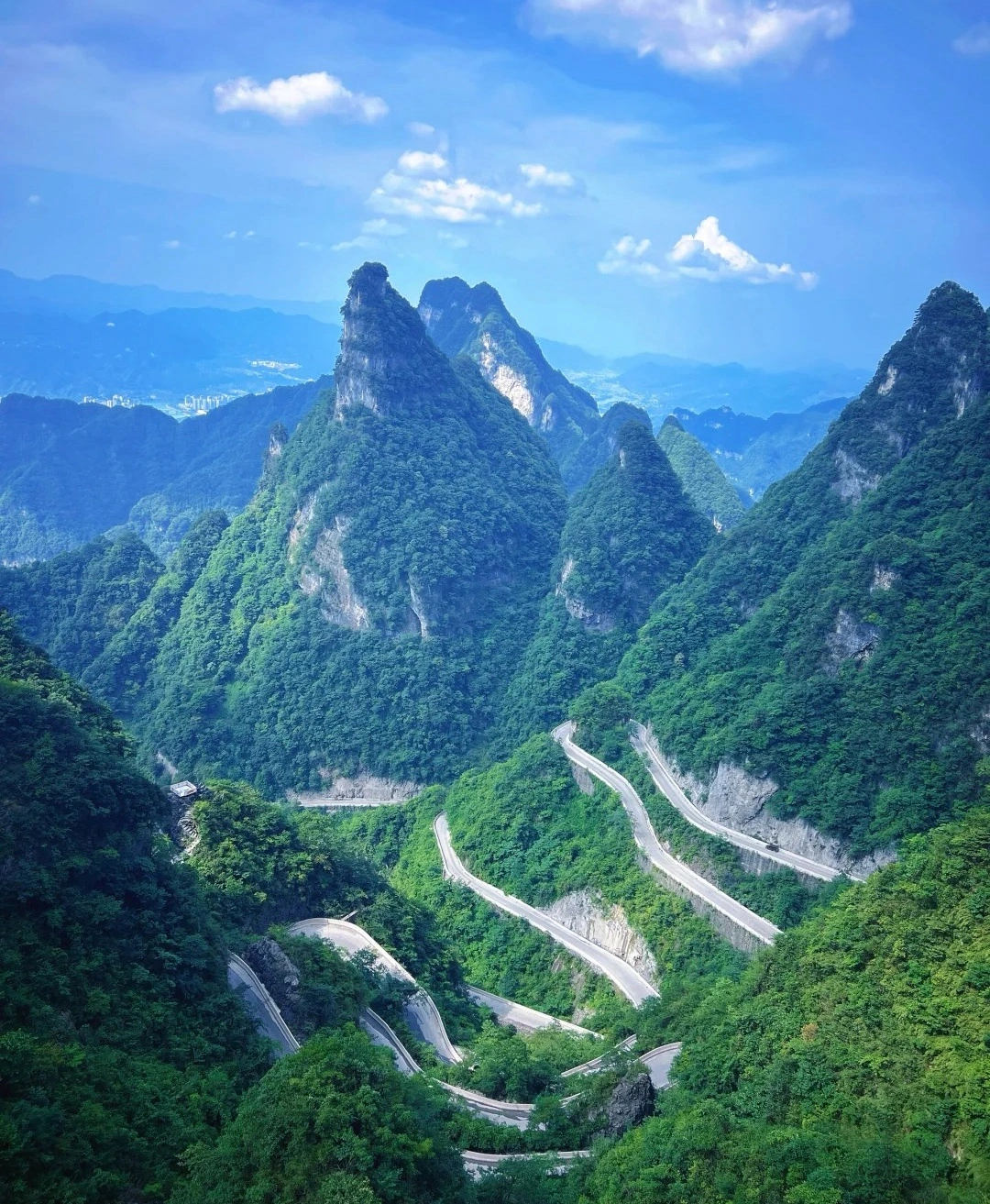
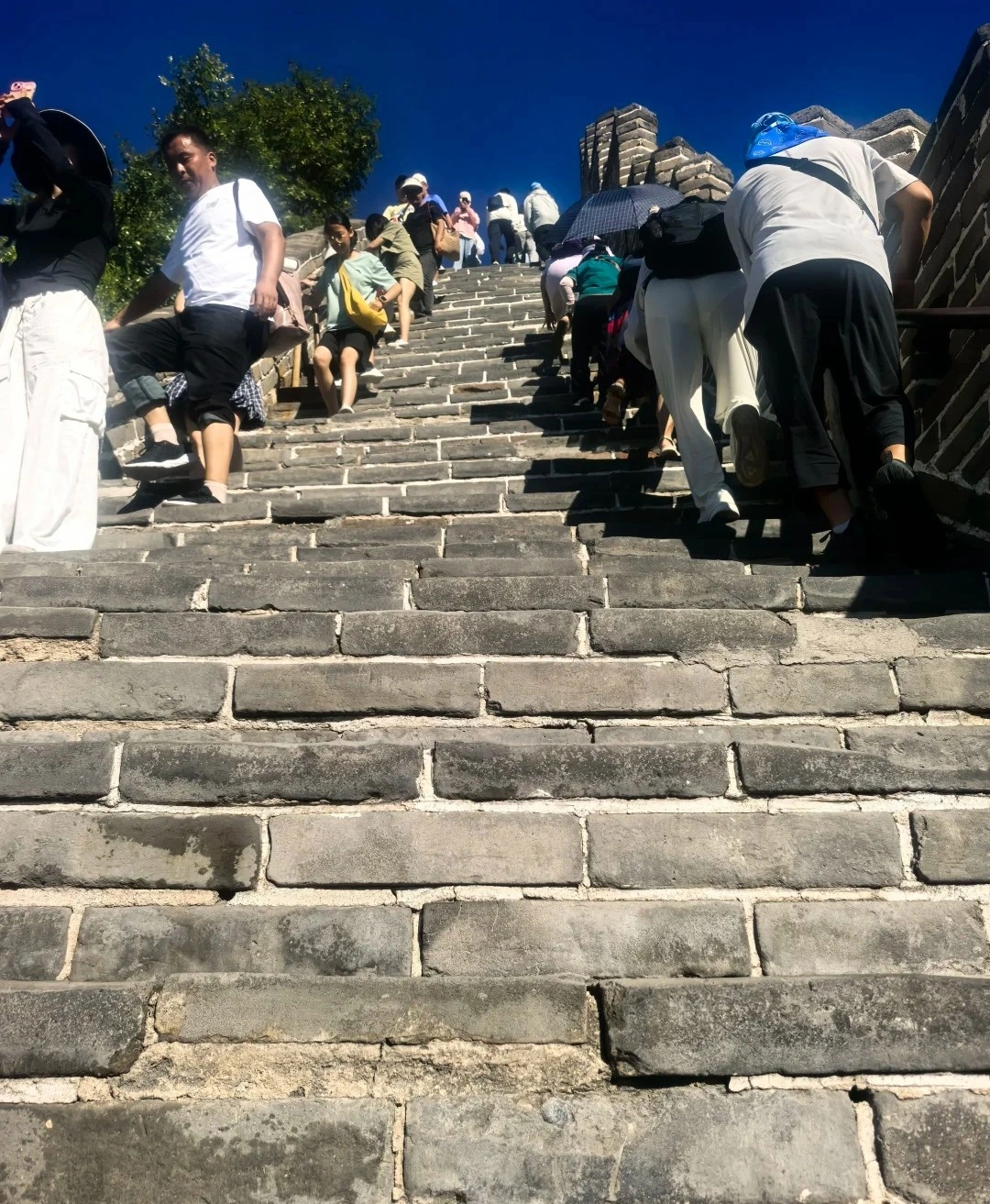
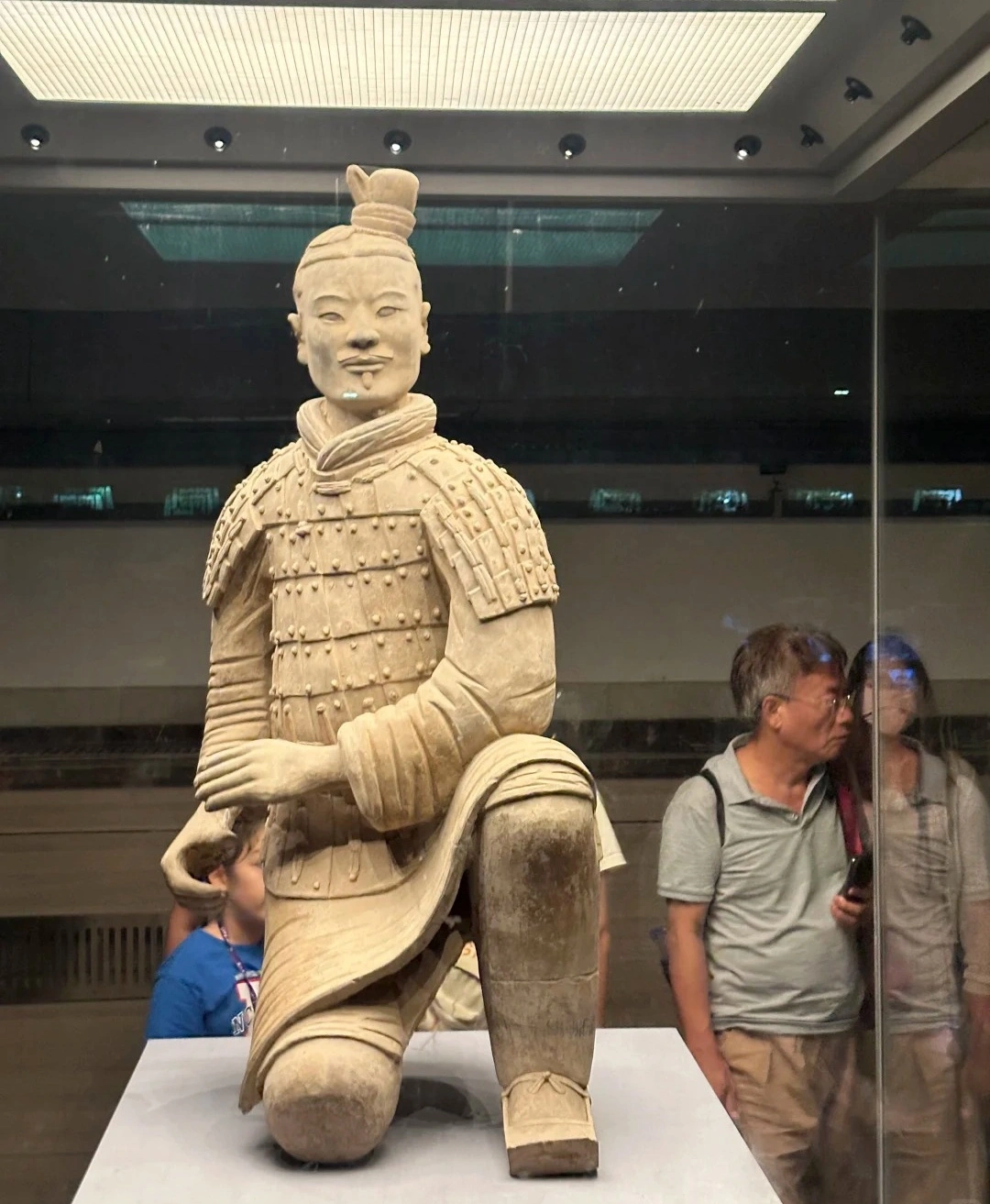
As a solo traveler from Canada, I was nervous about navigating China alone—but this 11-day tour was PERFECT! From hiking the Great Wall at sunrise (Day 3) to gasping at the Terracotta Army (Day 5), every day delivered ‘pinch-me’ moments. The real showstopper? Zhangjiajie’s Avatar Mountains (Day 7)! Our guide made the stone pillars come alive with stories. Massive thanks for handling all logistics—bullet train tickets, entry passes, car! And the 4-star hotels surprised me.
Destination(s): Beijing Xian Zhangjiajie Shanghai
Date of Experience: June 02,2025
... ... ...
...
Simon
America
Reviewed on May 29,2025
Our 2-day Zhangjiajie tour was beyond spectacular! As someone who’s visited Beijing and Shanghai for work, this trip revealed China’s wild, magical heart. Day 1 in Zhangjiajie National Forest Park felt like stepping onto Pandora—I’m a huge Avatar fan, and Yuanjiajie’s floating peaks left me breathless. The misty pillars and lush valleys like pure movie magic! Then came Fenghuang Ancient Town, we eat dinner beside the thundering waterfall. It seems Unreal! The night views of stilt houses glowing over the river were straight from a fairy tale. For fellow Avatar lovers and adventure seekers: Don’t miss this bucket-list experience! 10/10 would return. A Well-Traveled Film Buff, May 2025
Destination(s): Zhangjiajie
Date of Experience: May 08,2025
... ...

Ask a Question

Question Summary (100 characters)
Details (optional) (2,000 characters)
Name
Country
Phone
Email