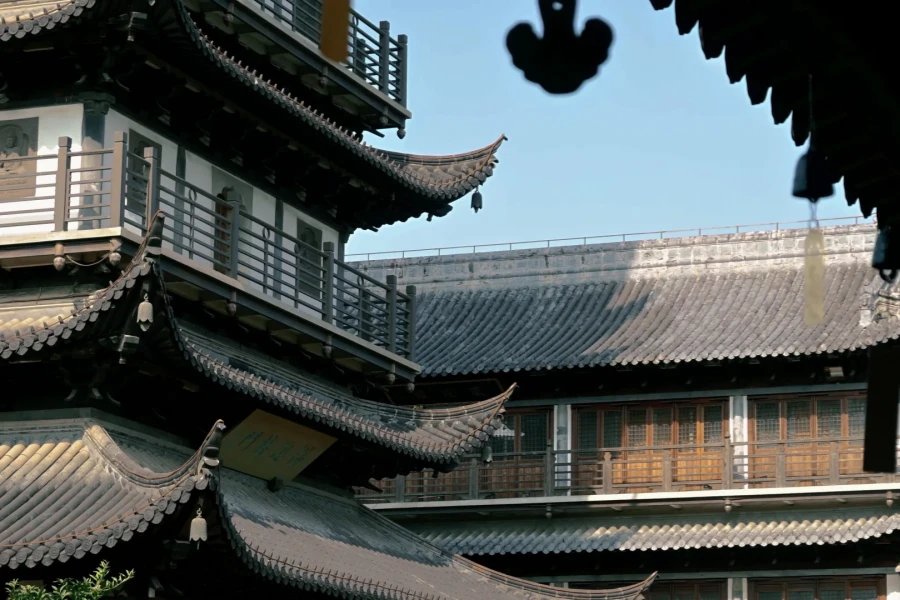
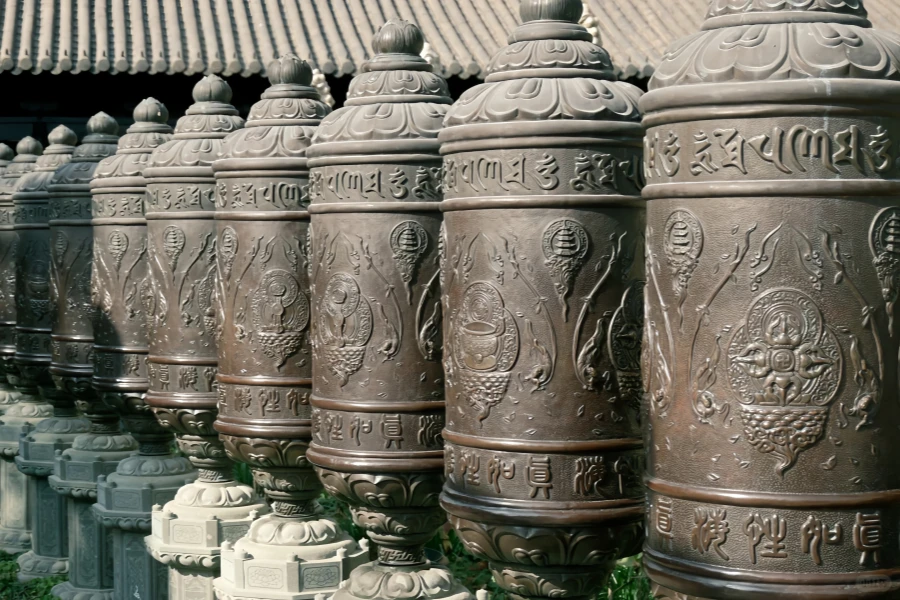
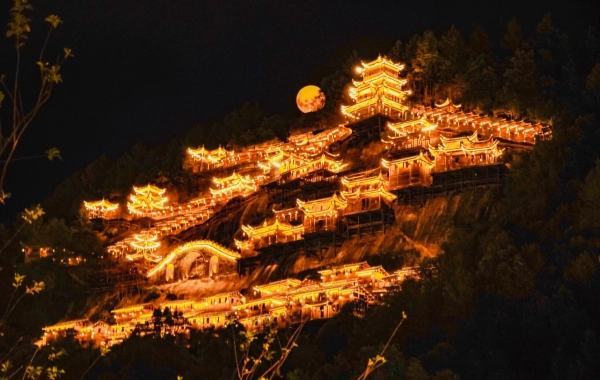
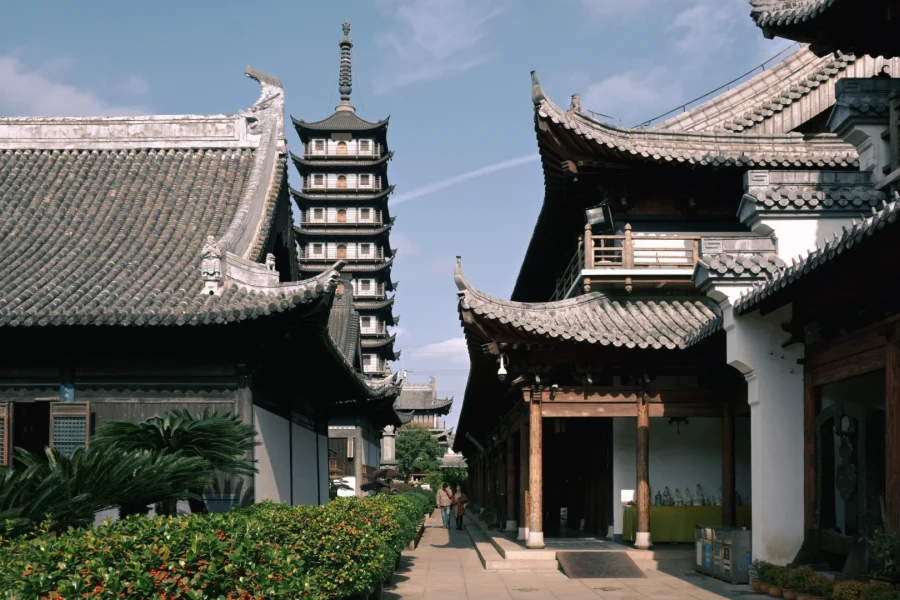
The charm of Zhenru Temple lies in its architectural value of "one hall determining the universe" and its garden Zen realm of "one tree, one world".
Humanistic Ingenuity: The Yuan Dynasty Code of Silent Wooden Structures
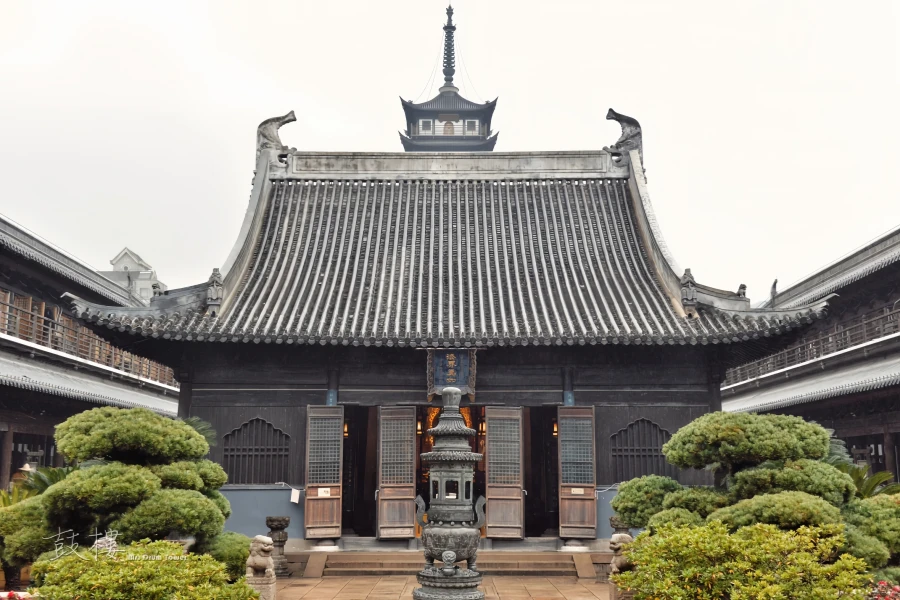
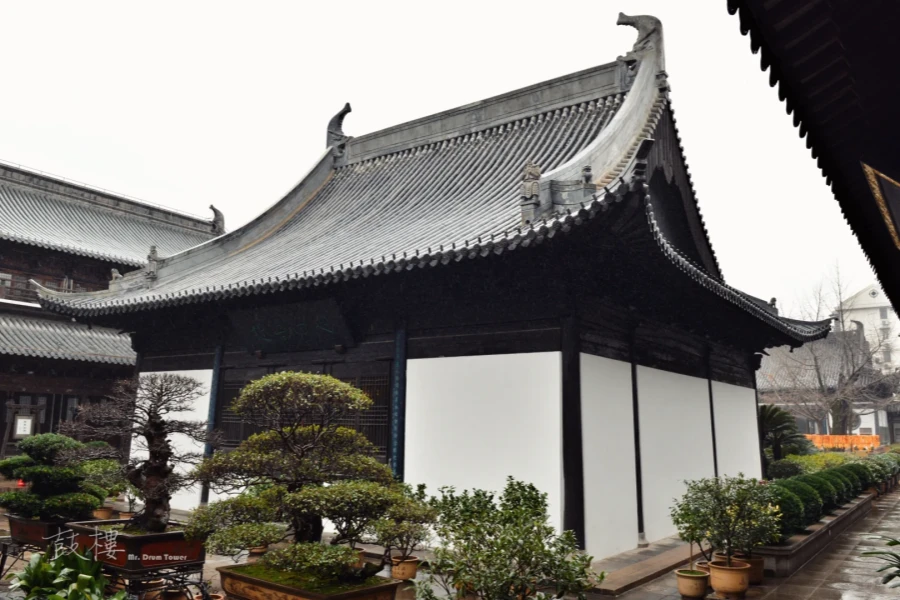
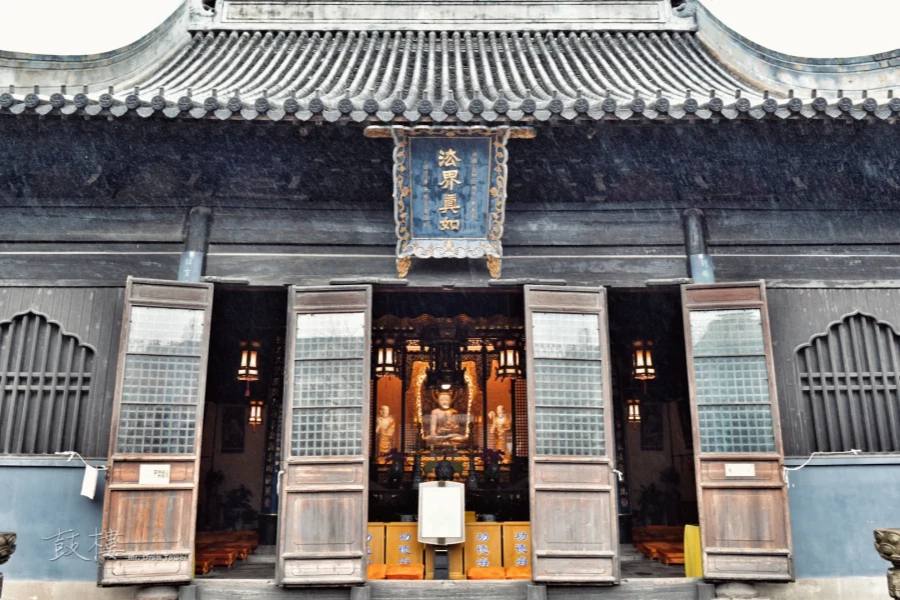
The soul of Zhenru Temple lies entirely in that Yuan Dynasty main hall that has stood for seven centuries.
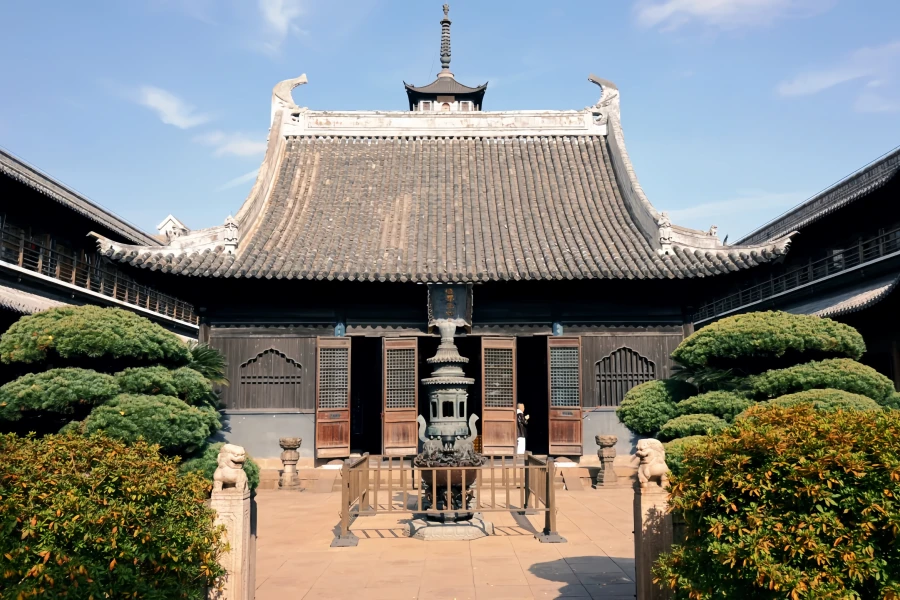
- Yuan Dynasty Main Hall (Mahavira Hall): This is one of the few authentic Yuan Dynasty wooden structures in southern China. Its architectural features are extremely distinctive:
- Floor plan: Three bays wide and three bays deep, forming a square shape, with a grand scale and simple style.
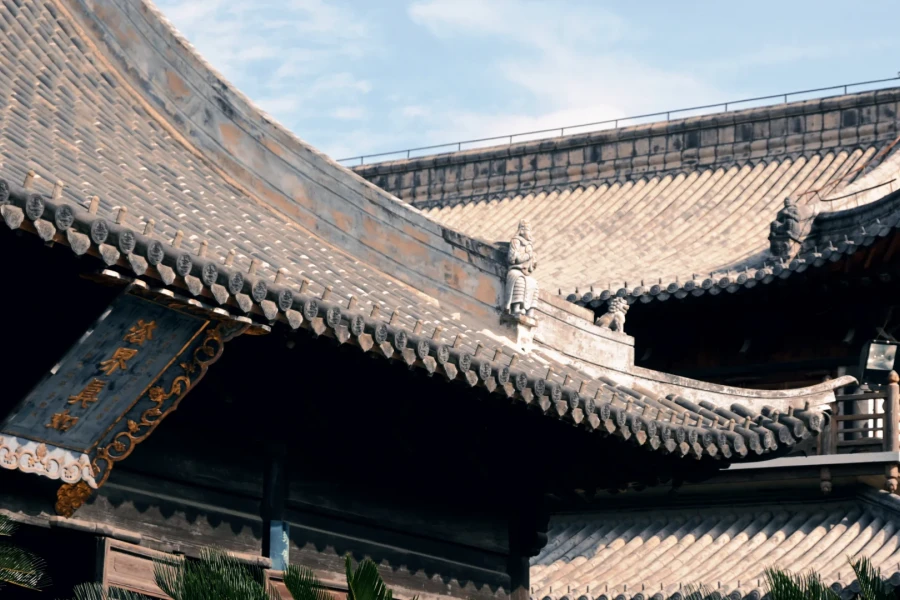
- Wooden Structure Features: The interior of the hall adopts the "exposed roof" construction, meaning the beam structure is completely exposed without a ceiling. Looking up, one can see massive moon beams, prismatic columns, and exquisite camel-hump brackets and dougong (bracket sets), which serve both as load-bearing structures and artistic decorations, showcasing the superb craftsmanship of Yuan Dynasty artisans. Many wooden components still retain ink inscriptions from that time, clearly recording the names of the craftsmen and the construction date, providing direct evidence for dating.
- Column bases and floor tiles: Some of the stone column bases inside the hall are shaped like lotus petals, which is a typical Song and Yuan style. Some of the floor tiles are also original Yuan dynasty artifacts, which can be called "living fossils".
- Precious cultural relics within the temple:
- Ancient bronze bell from the Ming Dynasty: Hanging in the bell tower, cast in the second year of the Hongwu reign of the Ming Dynasty (1369), the bell has a deep and resonant sound with a long aftertaste.
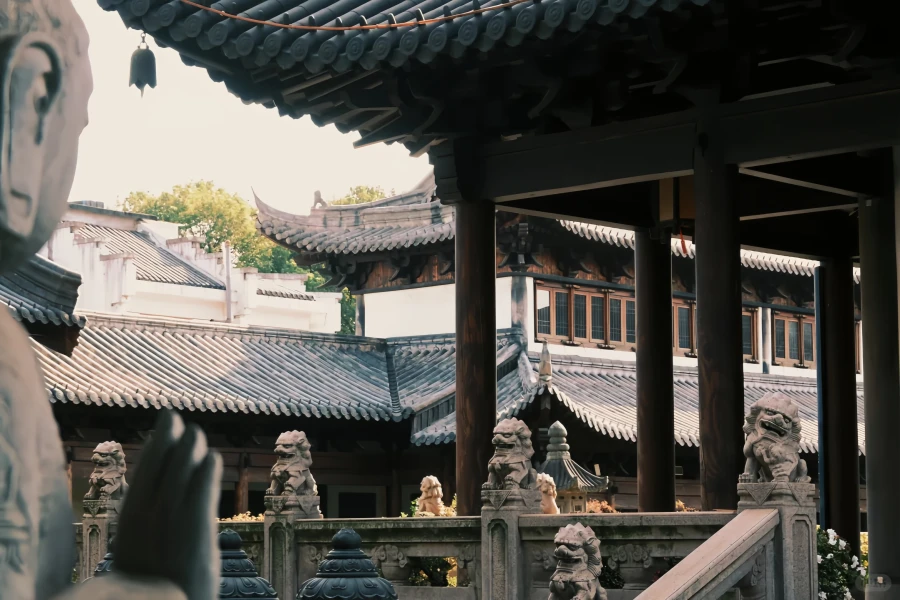
- Stone Tigers from the Yuan Dynasty: A pair of stone tigers in front of the main hall, with simple and powerful carving lines and a lovable appearance, have guarded the ancient temple for hundreds of years.
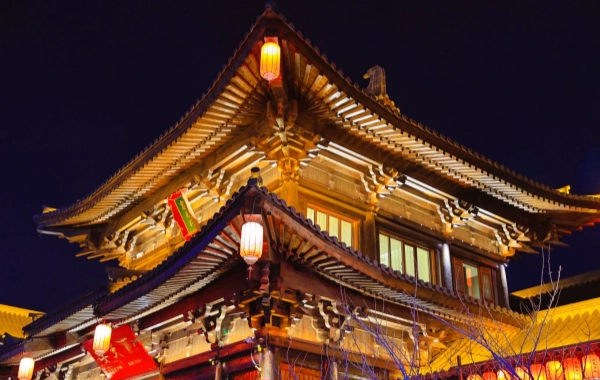
- Modern reconstruction in the style of the Yuan Dynasty: The Heavenly King Hall, Guanyin Hall and other buildings on the central axis of the temple were all rebuilt in modern times in the style of the Yuan Dynasty. They are in harmony with the main hall and together they form a solemn and majestic Buddhist atmosphere.
Garden Zen – A Tranquil Haven in the City
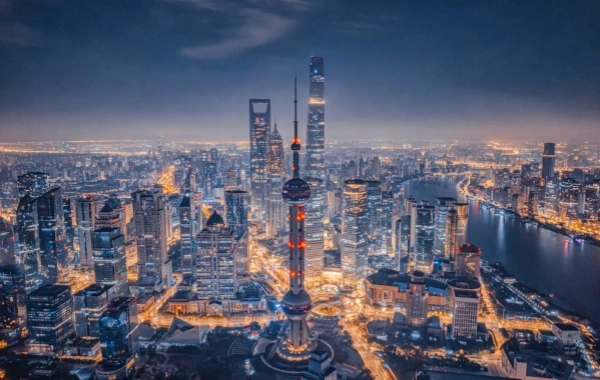
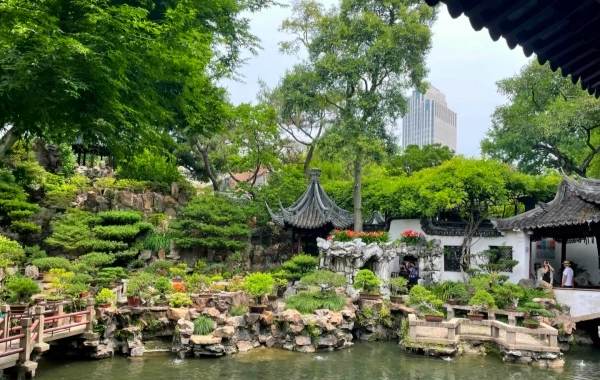
Despite being located in the bustling city, Zhenru Temple has become a tranquil haven, with ancient trees and courtyards adding to its vibrant atmosphere.
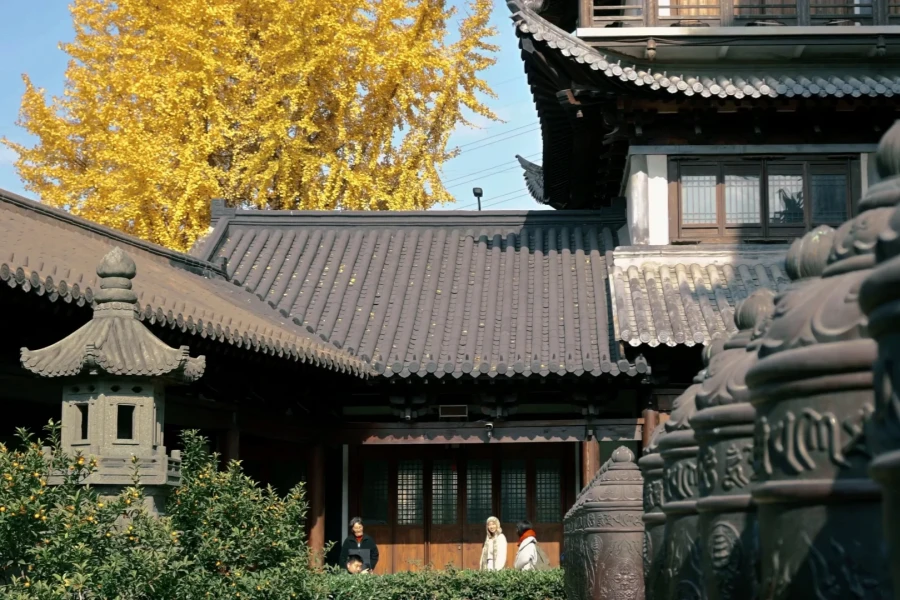
- Ancient Ginkgo Trees: Many ancient ginkgo trees in the temple are over a century old, with the most famous one standing alongside the ancient hall. In late autumn, golden ginkgo leaves blanket the blue brick ground in front of the hall, creating a stunning classical scene with the vermilion doors and windows and the gray tiled roof, a landscape that photography enthusiasts pursue year after year.
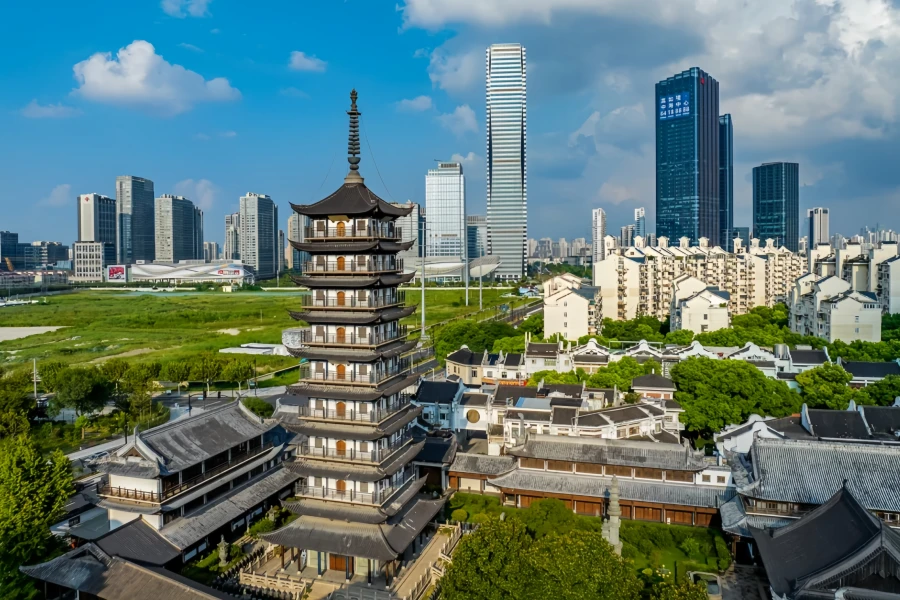
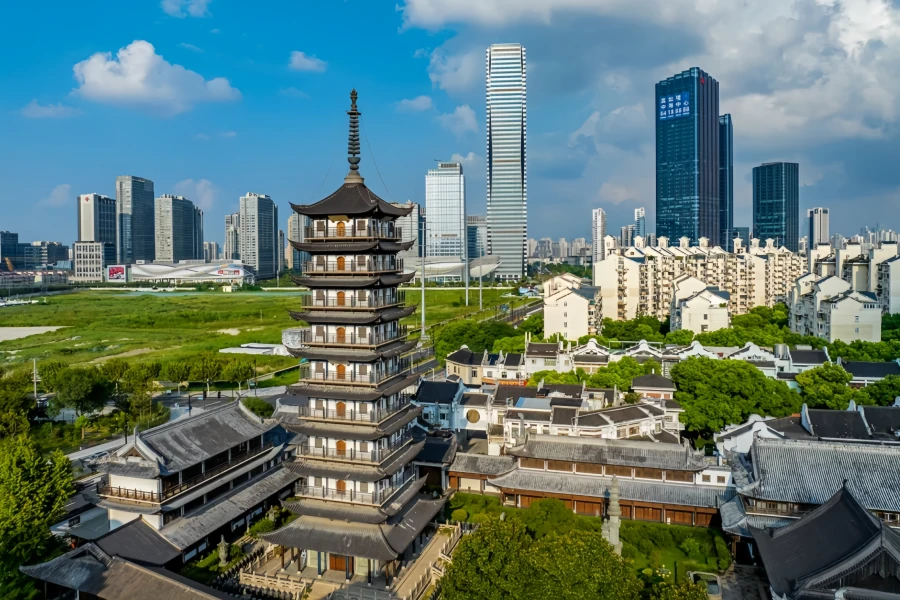
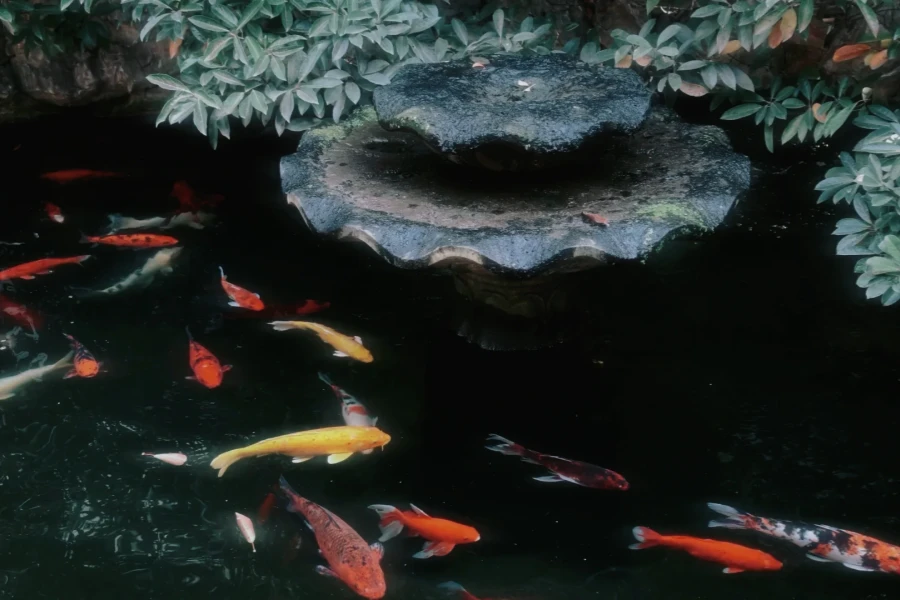
- Zhenru Pagoda and Release Pond: The majestic Zhenru Pagoda is the highest point in the temple, offering panoramic views of the entire complex. The release pond in front of the pagoda is calm and still, with fish swimming leisurely, adding a touch of liveliness and Zen charm.
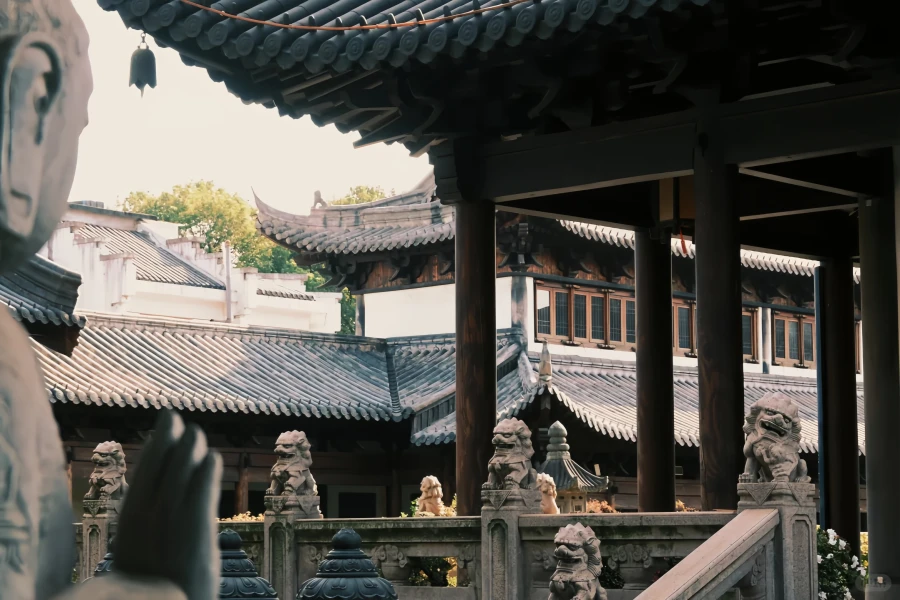
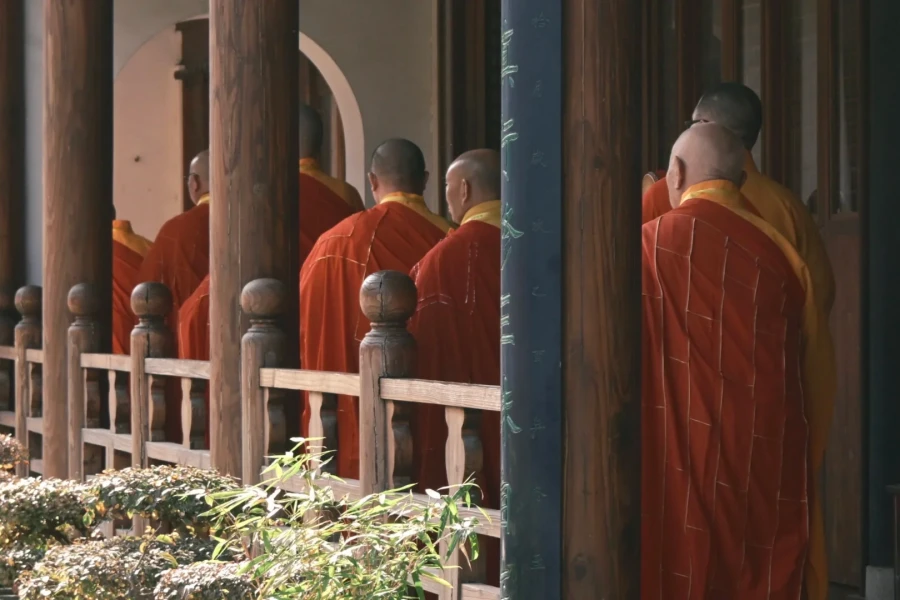
- Courtyards and Incense Paths: The temple courtyards are exquisitely laid out, with swaying bamboo shadows and scattered potted plants. Strolling along the quiet paths, you can hear the faint sounds of chanting and wind chimes, instantly isolating you from the hustle and bustle of the outside world. It is a rare place for "urban meditation".
Photography Tips:
The best vantage point for photographing the exterior of the main hall is in the square in front of the hall, where you can use a wide-angle lens to capture the entire building, especially in autumn with the ancient ginkgo trees in the foreground.
> Internal structure: Take photos of the exposed beams and brackets inside the hall from below, using side lighting to showcase the texture and volume of the wooden structure (please keep quiet and do not use flash).
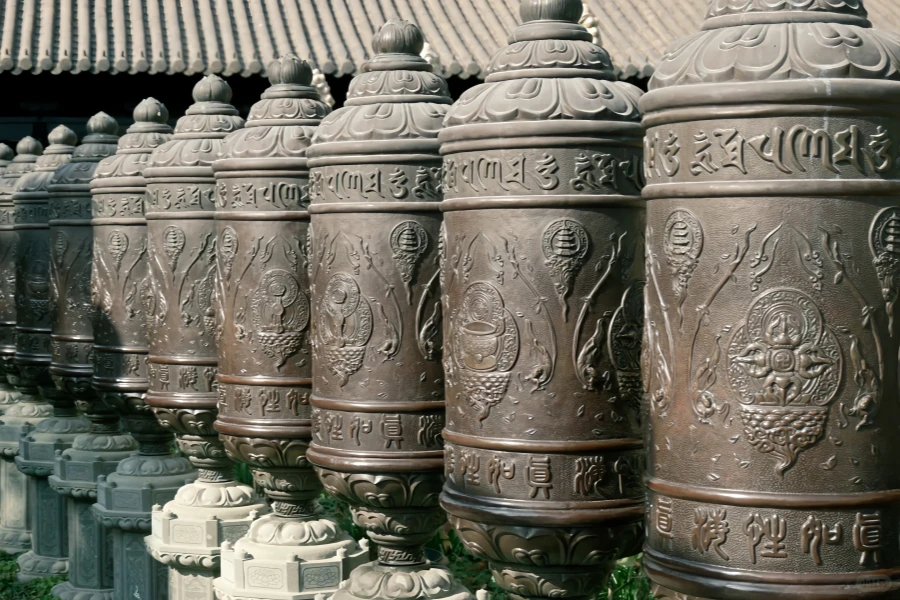
Close-up details: Focusing on the patterns and signs of time on the stone tiger, column bases, and bronze bell;
Moments of light and shadow: The slanting sunlight at dawn or dusk can drape ancient buildings in a golden cloak, creating a profound and evocative atmosphere.